









ONDON, United Kingdom, October 6, 2026: Britain’s political debate has intensified after Conservative leader Kemi Badenoch unveiled plans to dramatically reduce the country’s overseas aid budget and use the savings to help fund a major expansion of prison capacity.
The Conservatives say they would cut annual overseas aid spending from around £9 billion to £1 billion and use part of the savings, alongside other spending reductions, to create 50,000 new prison places across England and Wales. The proposal has triggered strong criticism from charities and political opponents, while the Conservatives argue that the plan would address Britain’s continuing prison-capacity problems.
The announcement comes as Prime Minister Andy Burnham’s Labour government faces pressure over prisons, public finances, defence spending, immigration and the cost of living. At the same time, the latest polling shows Labour gaining ground, while the Conservatives and Reform UK continue to compete for support on the right of British politics.
The Conservative prison plan
The central proposal from Badenoch is the construction of 50,000 additional prison places within seven years, with most of the new capacity expected to be delivered during a single parliamentary term.
The Conservatives estimate the prison programme would require around £2 billion a year. They say the money would come from several spending reductions rather than from borrowing.
The largest proposed saving would come from overseas development spending. The Conservatives want to reduce the aid budget to £1 billion annually. They would also cut around £1 billion from the Department for Culture, Media and Sport and reduce Cabinet Office communications spending by approximately £500 million.
Badenoch has presented the proposal as a direct response to Britain’s prison overcrowding problem.
The Conservatives argue that prisons should be expanded rather than relying on schemes that release offenders before the end of their sentences. The party has described its proposed expansion as the biggest increase in prison capacity since the Victorian era.
Why prisons have become a major political issue
Prison capacity has become one of the most difficult problems facing successive UK governments.
The previous Conservative government introduced an early-release scheme in 2023 as prisons struggled with overcrowding. The Labour government has continued using early release under its own arrangements because the pressure on available prison places has remained significant.
According to figures cited in recent reporting, more than 70,000 prisoners have been released early since 2024 under the Labour government’s scheme. Around 5,000 prisoners are expected to be released early over the coming year under the current arrangements.
The government has also made changes to the categories of offenders eligible for early release. Prime Minister Andy Burnham’s government has excluded certain serious offences, including manslaughter and some child-related and grooming offences, from the current programme.
The Conservatives argue that the continued use of early release demonstrates that Britain needs more prison capacity.
Labour, however, has attacked the Conservative proposal, pointing to the party’s record when it was previously in government. Labour chair Bridget Phillipson argued that the Conservatives left the criminal justice system under severe pressure and questioned whether their new promises were financially credible.
The controversial overseas aid proposal
The proposed aid reduction is arguably the most controversial part of the Conservative plan.
Britain has already reduced its international development budget in recent years. The current government has committed to reducing official development assistance from around 0.5% of gross national income to 0.3% by 2027/28, largely to help finance increased defence spending.
According to the House of Commons Library, aid spending is projected to fall to about £9.2 billion in 2027/28 at 0.3% of GNI. If spending had remained at 0.5%, it would have been approximately £15.4 billion.
The Conservative proposal would go considerably further by placing annual aid spending at approximately £1 billion.
That would represent a dramatic reduction in Britain’s role as an international aid donor.
Critics say such a reduction could make it difficult for the UK to honour existing international commitments.
Recent analysis has highlighted that Britain’s existing commitments to organisations including the UN, World Bank’s International Development Association, Gavi and the Global Fund already total more than £1.6 billion a year.
That means a £1 billion overall aid budget could leave very little room for additional humanitarian and development programmes after existing obligations are taken into account.
Charities warn of damage to Britain’s global influence
The proposed reduction has attracted criticism from major development organisations.
Oxfam said cutting UK aid would ultimately create higher costs both internationally and domestically. The organisation argued that Britain should maintain its international development role, particularly as the country prepares to take on the G20 presidency.
Bond, the UK’s network for organisations working in international development, has also criticised the government’s existing aid reductions and warned about the effect on humanitarian and development programmes.
The criticism reflects a wider debate about Britain’s international role.
Supporters of higher aid spending argue that development assistance can strengthen Britain’s diplomatic influence, support global health programmes and help prevent humanitarian crises from becoming larger and more expensive problems.
Conservatives counter that the government must prioritise domestic challenges when public finances are under pressure.
Britain is already reducing aid
The Conservative proposal is therefore not happening in isolation.
The UK’s aid budget has already been falling for several years. The government announced that spending would move from 0.5% of GNI toward 0.3% by 2027/28, with the savings helping finance higher defence spending.
Official plans indicate that aid spending will decline from around 0.48% of GNI in 2025/26 to approximately 0.37% in 2026/27 and 0.30% in 2027/28.
The government has also changed the way it intends to use the remaining aid budget, focusing more heavily on humanitarian assistance, global health, climate and nature, economic development, and support for women and girls.
The Conservative proposal would represent another major shift beyond those already announced reductions.
The wider political battle
The aid and prison debate comes at an important moment for British politics.
The Conservative Party has been attempting to redefine its political identity under Kemi Badenoch after its heavy defeat at the 2024 general election.
At its 2026 conference in Birmingham, the party has promoted a programme focused on lower taxes, reduced regulation, tougher immigration policies, higher defence spending and significant reductions in government spending.
The party has also proposed major changes to Britain’s approach to net zero, the civil service and immigration.
At the same time, Reform UK remains a major competitor for Conservative voters, putting additional pressure on Badenoch to offer policies that appeal to voters concerned about immigration, crime, taxes and government spending.
Labour faces its own challenges
While the Conservatives are attacking the government over crime and public finances, Andy Burnham’s administration is attempting to establish its own policy direction.
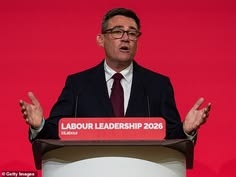
Burnham became prime minister on July 20, 2026, after being elected Labour leader. His government has placed greater emphasis on devolution, public services and a different economic model.
Recent government announcements have included plans for a National Care Service, changes to water-sector public control and measures aimed at reducing household costs.
The government is also facing pressure over defence spending. Reports this week suggest Burnham is considering delaying a major spending review that would set out how Britain could move toward a defence spending target of 3% of GDP by 2030.
That creates a difficult balancing act: Britain wants to increase defence spending while also dealing with pressure on public services, welfare, prisons and household finances.
Labour’s position on the prison crisis
The Labour government says it is dealing with a prison system that was already under severe pressure.
Its strategy has included changes to sentencing and early-release arrangements, alongside efforts to expand capacity.
The Sentencing Act 2026 has changed how some prisoners can be released and forms part of the government’s broader attempt to manage the prison population.
But the government continues to face criticism from opposition parties that early release puts public safety at risk.
The Conservatives are attempting to turn that criticism into a central political argument: instead of releasing prisoners early because cells are unavailable, they argue that Britain should build enough capacity to keep serious and repeat offenders in prison.
The political numbers are changing
The latest YouGov polling reported by Sky News provides another important backdrop.
Labour is currently on 27%, up three points, while Reform UK is on 22%, down three points. The Conservatives are on 20%, up one point, with the Liberal Democrats on 11% and the Greens on 11%.
The figures suggest Labour has recently strengthened its position, although the opposition parties remain highly competitive.
For the Conservatives, policies such as the prison expansion and aid reduction are therefore not only about government spending. They are also part of a broader attempt to distinguish the party from Labour and compete with Reform UK.
What the proposal could mean for Britain
The Conservative plan could have significant consequences if the party eventually formed a government.
Prisons: 50,000 additional places would represent a major expansion of the UK’s prison estate.
Government spending: The Conservatives would have to make substantial reductions in other areas to finance the programme.
Foreign aid: Britain’s international development role would become much smaller.
Defence: The party is also proposing higher defence spending, creating additional pressure on the government budget.
International relations: A sharp reduction in aid could affect Britain’s relationships with developing countries and international institutions.
Domestic politics: Crime, immigration and government spending are likely to remain major issues in the next general election.
What to watch next
The Conservative spending plans: The key question is whether the party can demonstrate that the proposed cuts would actually generate enough money to fund 50,000 prison places.
The prison capacity crisis: The number of prisoners being released early and the government’s ability to build additional capacity will remain politically important.
The aid debate: Charities and international organisations are expected to continue challenging the proposed £1 billion limit.
Labour’s economic plans: Burnham’s government faces difficult decisions over taxes, public services and defence spending.
Polling: Labour’s recent improvement will be closely watched to see whether it represents a temporary change or a sustained political shift.
Final thoughts
Britain’s latest political dispute over prisons and overseas aid highlights a much larger question facing the country: how should the government spend limited public money while trying to address both domestic problems and Britain’s international responsibilities?
The Conservatives are proposing a sharp change in priorities, with a much smaller aid budget helping finance a major expansion of prisons. Labour, meanwhile, is attempting to deal with prison overcrowding while managing pressure on public finances and preparing for higher defence spending.
The debate is unlikely to disappear soon. With crime, immigration, taxation, public services and government spending all competing for political attention, the decisions made over the next year could have consequences well beyond the current Parliament.
Sources: UK Government, UK Parliament House of Commons Library, Sky News, The Independent, The Guardian, Oxfam and Conservative Party conference materials