









Murder of Tammy Terrell
For more than four decades, a young woman’s identity remained one of the unanswered questions surrounding a brutal homicide in Henderson, Nevada. Her remains were discovered in October 1980, but despite repeated investigations, forensic examinations, and public appeals, authorities could not determine who she was.
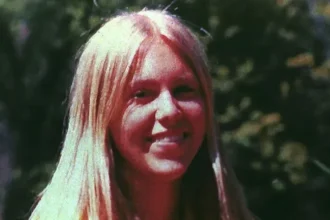
Known as Arroyo Grande Jane Doe, the unidentified victim eventually became the focus of renewed investigative efforts and advanced DNA analysis. In December 2021, investigators announced that she had been identified as Tammy Corrine Terrell, a 17-year-old from Roswell, New Mexico.
Although her identity was finally established, important questions about the circumstances of her death and the person or people responsible remained unanswered.
The Discovery in Henderson, Nevada
On the evening of October 5, 1980, two brothers traveling along a dirt road in Henderson, Nevada, discovered the body of a young woman near the Arroyo Grande wash, south of what was then State Route 146. One of the men was an off-duty police officer.
Investigators estimated that the victim was between 13 and 25 years old, with her age most likely around 17 or 18. She was found face-down and unclothed, and the condition of her body indicated that she had suffered a violent attack.
The examination revealed multiple injuries to the back of her head, injuries to her face, and seven puncture wounds in the upper-left portion of her back. One of her lower teeth had also been knocked out. Investigators documented evidence consistent with sexual assault.
Authorities believed the fatal injuries involved an unidentified two-pronged instrument. The victim’s body appeared to have been washed, and a piece of yellow or orange shower curtain was found nearby. These details became part of the investigation, although they did not immediately lead detectives to a suspect.
The victim was believed to have died around October 4, 1980, approximately one day before her body was discovered.
A Young Woman Whose Identity Was Unknown
Investigators carefully documented the victim’s physical characteristics in hopes that someone would recognize her.
She stood approximately 5 feet 2 inches tall and weighed an estimated 98 to 110 pounds. Her shoulder-length hair was described as brownish-blond, reddish-blond, or strawberry blond. Her eyes were reported as hazel or blue, with some descriptions suggesting green.
She had pierced ears, silver-colored nail polish, and a small, amateur-looking letter “S” tattooed in blue ink on the inside of her right forearm. Investigators believed the tattoo may have been made relatively shortly before her death. She also had a vaccination scar on her left upper arm.
Dental evidence provided additional clues. The young woman had fillings and an unusual procedure involving a suture technique used to straighten a tooth. Her wisdom teeth were still present but impacted, and investigators documented a gap between two upper-right teeth. A previous jaw fracture was also considered a possibility.
Despite these details, fingerprints and dental records did not produce a match. Without a confirmed identity, investigators had no clear way to reconstruct her final days or notify relatives.
The Arroyo Grande Jane Doe Investigation
The unidentified victim became known as Arroyo Grande Jane Doe, a name derived from the area where her body was found.
Over the years, investigators pursued numerous leads and compared the case with reports of missing people. Several television programs featured the case, and forensic facial reconstructions were produced to help members of the public recognize the victim.
The investigation also involved repeated examinations of her remains. Her body was exhumed in 2002, 2003, 2009, and 2016 as authorities sought new evidence and revisited possible identities.
In 2003, investigators examined a lead involving a missing girl from California. DNA testing ultimately excluded that individual as the victim. Authorities also ruled out approximately 20 other possible identities.
In June 2015, the case was officially reopened. The renewed investigation included updated facial reconstruction work developed with assistance from the National Center for Missing & Exploited Children (NCMEC).
A former Clark County coroner who had been involved in the case continued working with the organization. He hoped the updated reconstruction would prompt someone who knew the young woman to come forward. The case also helped inspire efforts to establish a dedicated cold-case unit for unresolved investigations.
The police officer who discovered the body remained personally connected to the case. He contributed money toward the victim’s burial and, according to reports, regularly visited her gravesite with his wife and left flowers in her memory.
DNA Technology Offers a New Lead
For decades, conventional investigative methods had failed to establish the victim’s identity. Advances in forensic DNA analysis eventually provided another opportunity.
In 2019, hair samples collected during the autopsy were sent to Astrea Forensics, a laboratory in Santa Cruz, California. Specialists used whole-genome sequencing to develop a genetic profile suitable for investigative genealogical research.
The resulting genotype file was uploaded to GEDmatch, a genealogy database that can help investigators identify potential relatives through genetic comparisons. By tracing possible family connections, genealogists hoped to narrow the search to a family whose missing relative matched the unidentified woman.
This approach, known as forensic genetic genealogy, has helped investigators in other cases where traditional fingerprint and dental comparisons have failed. In the Arroyo Grande Jane Doe investigation, it ultimately contributed to the breakthrough that had eluded authorities for 41 years.
Identification as Tammy Corrine Terrell
On December 2, 2021, the Henderson Police Department announced that Arroyo Grande Jane Doe had been identified as Tammy Corrine Terrell, a 17-year-old from Roswell, New Mexico.
The identification was achieved through forensic genealogy under the supervision of genetic genealogist Barbara Rae-Venter, who had also contributed to the investigation that identified the Golden State Killer in 2018.
DNA samples from Tammy’s two sisters were used to confirm her identity. After decades of uncertainty, the young woman who had been buried without her name could finally be identified.
The announcement provided a long-awaited answer to one central question: who was the victim found in Henderson in October 1980?
However, identifying Tammy did not automatically resolve the homicide. Investigators still needed to establish what happened to her, who was responsible, and why she ended up in Nevada.
Tammy’s Final Known Days
Investigators determined that Tammy had last been seen on September 28, 1980, when she was dropped off at the Roswell State Fair in New Mexico.
Later that night, she was reportedly seen at a restaurant in Roswell with a white man and a woman. Accounts indicated that the group may have been planning to travel to California, but the available information does not establish where they went afterward or whether the proposed trip took place.
The period between Tammy’s last known sighting and the discovery of her body remains an important part of the case. Establishing who she was with, where she traveled, and how she reached Nevada could help investigators reconstruct her movements and identify potential witnesses.
Authorities have not publicly established a definitive account of those final days in the information summarized here. The reported sighting and possible travel plans therefore remain investigative leads rather than proof of what happened.
A Cold Case That Changed Through Persistence
Tammy Corrine Terrell’s case demonstrates how an unidentified victim investigation can continue long after the initial evidence has gone cold. Fingerprints, dental records, public appeals, facial reconstructions, repeated examinations, and DNA analysis each contributed to the effort to establish her identity.
The breakthrough in 2021 restored Tammy’s name and connected the case to her family. It also illustrated the growing role of forensic genetic genealogy in identifying victims whose names have remained unknown for years or even decades.
Yet identification is only one part of the search for justice. The circumstances of Tammy’s death still require answers, and the evidence surrounding her final movements may remain important to investigators.
For Tammy’s family, the announcement ended years of uncertainty about her identity. For those continuing to investigate her killing, it marked a significant milestone—not necessarily the conclusion of the case.
Frequently Asked Questions
Who was Arroyo Grande Jane Doe?
Arroyo Grande Jane Doe was the name given to a young woman whose body was discovered in Henderson, Nevada, on October 5, 1980. In 2021, she was identified as Tammy Corrine Terrell, a 17-year-old from Roswell, New Mexico.
How was Tammy Corrine Terrell identified?
Investigators used forensic genetic genealogy. Hair samples from her autopsy were analyzed through whole-genome sequencing, and genetic information was used to pursue family connections. DNA samples from her two sisters helped confirm her identity.
When was Tammy Terrell last seen?
Tammy was last seen on September 28, 1980, when she was dropped off at the Roswell State Fair. She was reportedly seen later that evening at a restaurant with a man and a woman.
Where was Tammy Terrell’s body found?
Her body was discovered near the Arroyo Grande wash in Henderson, Nevada, south of State Route 146 as it existed at the time.
Has Tammy Terrell’s murder been solved?
Her identity was confirmed in December 2021, but identification alone did not solve the homicide. The investigation into her death was reported as ongoing in the source material summarized for this article.
Why is the Arroyo Grande Jane Doe case significant?
The case illustrates the persistence required to identify unidentified homicide victims and shows how modern DNA sequencing and genetic genealogy can provide answers after traditional investigative methods have failed.
Tammy Corrine Terrell is no longer an unidentified Jane Doe. Her name is known, but the search for a complete account of her death remains an important part of her story.