








Sherri Ann Jarvis: The Walker County Jane Doe Case
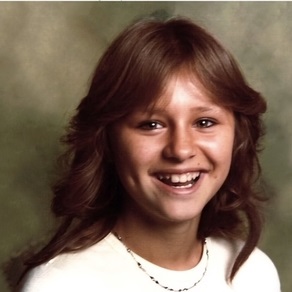
For 41 years, an unidentified teenage murder victim buried in Huntsville, Texas, was known as the Walker County Jane Doe. Her identity remained a mystery despite years of investigation, public appeals, and forensic facial reconstructions. In November 2021, investigators finally identified her as Sherri Ann Jarvis, a 14-year-old girl from Minnesota.
Although the identification brought long-awaited answers to her family, it did not solve the central question of the case: who killed Sherri and why? Her murder investigation remains open, and authorities continue to seek information that could lead to the person or people responsible.
Who Was Sherri Ann Jarvis?
Sherri Ann Jarvis was born on March 9, 1966, and grew up in Forest Lake, Minnesota. Friends reportedly knew her by the nickname “Tati.”
At age 13, Sherri was placed in state custody because of habitual truancy. She ran away shortly after her 14th birthday in 1980. Her decision to leave home placed her in a vulnerable position, far from the people who might otherwise have helped protect her.
Sherri’s final known contact with her family was a letter she sent to her mother from Denver in August 1980. In the letter, she expressed frustration about being in state custody but indicated that she intended to return home eventually.
That return never happened. In the months that followed, Sherri’s family had no clear understanding of her whereabouts or the tragedy that had occurred in Texas.
Discovery Near Interstate 45
On the morning of November 1, 1980, a truck driver discovered the body of a young woman in a grassy area near Interstate 45, approximately two miles north of Huntsville, Texas, close to the Sam Houston National Forest.
The victim was initially estimated to be between 14 and 18 years old. Investigators determined that she had died only several hours before her body was found.
She was wearing a thin gold chain with a rectangular brown pendant containing a smoky blue or brown stone. Red leather high-heeled sandals with light brown straps were also recovered at the scene. Most of her other clothing was missing.
The medical examination revealed that the teenager had suffered severe violence. The cause of death was determined to be asphyxia due to ligature strangulation. Investigators also documented evidence of a sexual assault and extensive physical injuries.
Despite the seriousness of the crime, authorities could not establish the victim’s name. Without a confirmed identity, investigators faced major obstacles in reconstructing her final movements and locating people who knew her.
The Last Known Sightings
Witness accounts provided some clues about the teenager’s movements on the evening before her death.
On October 31, 1980, a girl matching the victim’s description was reportedly seen at a Gulf service station in Huntsville. A witness recalled that she had arrived in a blue Chevrolet Caprice with a light-colored roof, driven by a white man.
The girl reportedly asked for directions to the Ellis Prison Farm, a correctional facility in Texas. After receiving directions, she left on foot.
Later, she was seen at the Hitch ‘n’ Post truck stop near Interstate 45, where she again asked how to reach the prison farm. She told a waitress that a friend was waiting for her there and reportedly said she was from either Rockport or Aransas Pass, Texas.
The waitress suspected that the girl might be a runaway. The teenager claimed to be 19, but the waitress questioned whether she was that age.
Investigators followed leads connected to the locations she had mentioned, contacted local law enforcement, and searched school yearbooks for possible matches. None of these efforts produced a confirmed identification at the time.
Whether the girl truly came from the Texas coastal communities she mentioned, and who the person driving the car was, remained unanswered questions.
Decades of Investigation
Before the victim’s identity was known, the case became widely recognized as the Walker County Jane Doe investigation. She was buried at Oakwood Cemetery in Huntsville in January 1981, beneath a donated headstone that identified her only as an unknown white female.
Investigators and forensic specialists continued working to establish who she was. The case involved repeated examinations of evidence, efforts to obtain usable DNA, and several facial reconstructions intended to show what the teenager might have looked like while alive.
Her remains were exhumed in 1999 for further forensic examination, including the collection of DNA. In November 2015, the Walker County Sheriff’s Office officially reopened the case.
Investigators also sought information about the red sandals found near the body. DNA testing was conducted on the footwear, although the results were not publicly disclosed in the source account.
The case attracted renewed attention through media coverage and public appeals. Still, the victim remained unidentified for decades, and no killer had been brought to justice.
How Forensic Genealogy Identified Sherri Ann Jarvis
A major breakthrough began in 2020, when the Walker County Sheriff’s Office partnered with Othram, a forensic DNA laboratory, to identify the victim through genetic genealogy.
Initial attempts to recover usable genetic material from her remains were unsuccessful. Researchers eventually obtained a usable DNA profile from preserved tissue samples.
Investigators used the profile to develop a family tree and identify potential relatives. DNA samples from living family members were then used to confirm the victim’s identity.
On November 9, 2021, authorities publicly announced that Walker County Jane Doe was Sherri Ann Jarvis, who had disappeared from Minnesota in 1980. Her identification had been announced privately or reported earlier in September, with the information withheld publicly to allow her family time to grieve.
After more than four decades, Sherri was no longer an unidentified victim. Her family could finally learn what had happened to her, although the circumstances of her murder remained unresolved.
Who Killed Sherri Ann Jarvis?
Identifying Sherri was a significant investigative achievement, but it did not reveal who killed her.
Investigators have explored whether her murder could be connected to other unsolved killings in Texas. One possibility considered was a potential link to the murder of Debra Jackson, known as “Orange Socks,” whose body was found in Georgetown, Texas, in 1979.
Authorities have also considered whether Sherri’s death might be connected to other female victims whose bodies were found along Interstate 45 in 1980. Similarities in the cases have raised questions about a possible shared perpetrator, but a connection has not been established conclusively.
Henry Lee Lucas has also been mentioned as a possible suspect in discussions of the case. However, the source account does not identify a confirmed primary suspect, and no one has been convicted of Sherri’s murder.
These possibilities remain investigative leads or hypotheses, not established facts. Determining whether any of the cases are connected will require reliable evidence linking the crimes and identifying the person responsible.
A Cold Case That Still Needs Answers
The identification of Sherri Ann Jarvis demonstrated how modern forensic genealogy can help solve the mystery of an unidentified person, even after decades have passed. DNA evidence gave a name back to a teenager whose family had spent years without knowing where she was.
But identification and justice are not the same thing. Sherri’s killer has not been publicly identified, and the investigation into her murder remains ongoing.
Her story also underscores the vulnerability of missing and runaway teenagers and the importance of taking reports of missing children seriously. Even when a case grows cold, preserving evidence, revisiting leads, and using new forensic techniques can create opportunities for progress.
More than 40 years after Sherri’s death, investigators continue to seek information that could explain her final hours and lead to the person or people responsible. For her family, identifying Sherri was a long-awaited answer. Bringing her killer to justice remains the unresolved next step.