








Disappearance of Bobby Dunbar
In the summer of 1912, the disappearance of a four-year-old boy from Louisiana triggered a nationwide search that eventually became one of America’s most puzzling identity mysteries. Robert Clarence “Bobby” Dunbar vanished during a family fishing trip, leaving his parents desperate for answers.
Eight months later, authorities announced that they had found the missing child in Mississippi. His parents, Lessie and Percy Dunbar, welcomed him home, and the boy grew up under Bobby’s name. However, another woman, Julia Anderson, insisted that the child was actually her son, Bruce Anderson, who had been traveling with a handyman named William Cantwell Walters.
The dispute ended with the Dunbar family retaining custody of the boy and Walters being convicted of kidnapping. Decades later, DNA testing challenged the outcome of the investigation and revealed that the child raised as Bobby Dunbar was not biologically related to the Dunbar family. The discovery raised a haunting question: had the real Bobby ever been found at all?
Bobby Dunbar’s Disappearance
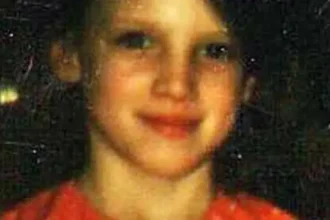
Robert Clarence Dunbar was born on May 23, 1908, to Lessie and Percy Dunbar of Opelousas, Louisiana. He was their first son, and his disappearance in August 1912 changed the family’s life forever.
On August 23, 1912, the Dunbars took a fishing trip to Swayze Lake in St. Landry Parish. During the outing, four-year-old Bobby disappeared. His family and local authorities began searching for him, while a reward of $1,000 was announced for information leading to his return.
As the search continued without success, the reward eventually increased to $6,000. Newspapers across the country reported on the missing child, helping turn the case into a widely followed story.
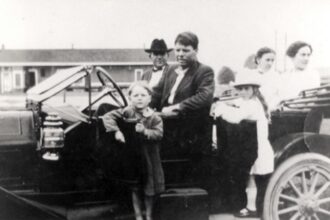
After approximately eight months, authorities located William Cantwell Walters in Mississippi. Walters earned a living traveling from place to place, working as a handyman who specialized in tuning and repairing pianos and organs. He was accompanied by a young boy whose appearance seemed to match descriptions of Bobby Dunbar.
Walters denied that the child was the missing Louisiana boy. He identified him as Charles Bruce Anderson, usually called Bruce, and said that the boy’s mother, Julia Anderson, had permitted him to take her son on a trip.
Authorities arrested Walters and contacted the Dunbar family so they could attempt to identify the child.
Two Families, One Child
When Lessie and Percy Dunbar arrived in Mississippi, the question of the boy’s identity quickly became controversial. Newspaper accounts described their first meeting differently. Some reports suggested the child immediately approached Lessie, while others said he cried and that she initially expressed uncertainty.
There were also conflicting descriptions of how the boy reacted to the Dunbars’ younger son, Alonzo. Some accounts claimed that he recognized the child immediately, while others reported no clear sign of familiarity.
The situation changed after Lessie examined the boy more closely. Following a bath, she reportedly identified marks and scars that convinced her he was her missing son. The child was subsequently taken back to Opelousas, where the family’s reunion was celebrated publicly.
However, the story was far from settled.
Julia Anderson traveled from North Carolina to support Walters’ account. She maintained that the boy was her son, Bruce, and explained that she had allowed Walters to take him on what was supposed to be a short visit to one of his relatives. According to her account, she had never agreed to a prolonged separation.
Anderson was unmarried and had worked as a field hand for Walters’ family. Reports stated that she was asked to identify her son among several boys of a similar age. During the initial identification, she reportedly expressed uncertainty. When she was permitted to examine the child more closely the following day, however, she became more convinced that he was Bruce.
By then, her initial hesitation had already damaged her credibility in the eyes of some observers. Newspaper coverage also focused on her personal life, including the fact that she had given birth to children outside marriage. These attitudes contributed to the dismissal of her claim.
William Walters’ Kidnapping Trial
Anderson had limited financial resources and could not afford a lengthy legal battle. She returned to North Carolina but later traveled back to Louisiana to support Walters during his kidnapping trial and argue that the boy belonged to her.
Residents of Poplarville, Mississippi, also supported Walters. The town’s residents had become familiar with him and the child during their travels. Several people reportedly said they had seen the pair together before Bobby Dunbar disappeared.
Despite this testimony and Anderson’s efforts, the court ruled that the boy was Bobby Dunbar. Walters was transferred to Louisiana for trial, convicted of kidnapping, and sentenced to life in prison.
The child remained with the Dunbar family and continued to live as Bobby. For years, the court’s decision was treated as the conclusion of the mystery.
Walters’ legal battle did not end with his conviction. After serving approximately two years in prison, his attorney successfully appealed the decision, and the Louisiana Supreme Court overturned the conviction. Walters was granted the right to a new trial, but prosecutors decided not to pursue the case again because of the expense involved. He was released.
Walters continued traveling after his release and maintained his innocence until his death on April 7, 1945.
Julia Anderson’s Life After the Trial
Following the trial, Anderson settled in Poplarville, where she eventually married and raised seven children. According to accounts from her descendants, she became deeply involved in her community, helped establish a church, and worked as a nurse and midwife.
Her family remembered her as someone who built a meaningful life despite the painful experience of losing contact with her son. Nevertheless, her children said she continued speaking about Bruce and maintained that he had been taken from her.
Anderson died on February 1, 1940, without seeing the later DNA evidence that would cast serious doubt on the identification made in 1913.
Her descendants would eventually find renewed reason to believe that her account of the events had been correct.
A Lifetime of Questions
The boy who grew up as Bobby Dunbar eventually married, had four children, and operated a gas station. Although he lived for decades under the identity accepted by the courts, questions about his origins persisted within the family.
In 1954, his son, Bobby Dunbar Jr., reportedly asked his father whether he was certain he really was Bobby Dunbar. His response suggested that he regarded his identity and his relationship with his family as settled matters, regardless of any lingering doubts.
Bobby Dunbar died on March 8, 1966, without knowing that future scientific testing would reopen the case.
Stories passed down by both the Dunbar and Anderson families later added another layer of uncertainty. In accounts shared decades afterward, members of Julia Anderson’s family recalled encounters with a man they believed might have been Bruce Anderson or the man raised as Bobby Dunbar. The Dunbar family also remembered a trip through Poplarville during which Bobby reportedly referred to the people who had once come to collect him.
These recollections could not independently establish the man’s identity, but they became part of the broader history surrounding the case.
The DNA Discovery That Changed Everything
In 1999, Margaret Dunbar Cutright, one of Bobby Dunbar’s granddaughters, began investigating the case. She reviewed historical newspaper reports, spoke with Julia Anderson’s children, and examined material from Walters’ original legal defense.
Although she initially hoped to confirm that her grandfather had been the real Bobby, her research gradually raised serious doubts about the accepted story.
In 2004, an Associated Press reporter revisited the case, prompting members of the Dunbar family to agree to DNA testing. Bobby Dunbar Jr. participated in testing that compared his biological relationship with a descendant of Alonzo Dunbar, the younger brother of the child raised as Bobby.
The results showed that the two men were not biologically related in the way expected if the returned boy had truly been the Dunbars’ missing son.
This finding undermined the identification made in 1913. The families involved came to accept that the child raised by Lessie and Percy Dunbar had most likely been Bruce Anderson, Julia Anderson’s son.
The DNA results did not establish exactly what happened to the real Bobby Dunbar after his disappearance. His fate remains unresolved.
What Happened to the Real Bobby Dunbar?
Margaret Dunbar Cutright later discussed her investigation in a 2008 episode of This American Life, titled The Ghost of Bobby Dunbar. She suggested that the real Bobby may have fallen into Swayze Lake during the family fishing trip and possibly been killed by an alligator.
That explanation was a theory, not a scientifically confirmed account of his death. No conclusive evidence established the precise circumstances of Bobby’s disappearance.
The DNA findings nevertheless brought a measure of vindication to Julia Anderson’s descendants, who had long believed that her son had been wrongly taken from her. Walters’ family also viewed the results as support for his claim that the boy traveling with him was not Bobby Dunbar.
Within the Dunbar family, however, the discovery created emotional difficulties. Many relatives had spent their lives identifying as members of the Dunbar family and cherished their existing relationships. The revelation challenged a story that had shaped several generations.
In 2012, Tal McThenia and Margaret Dunbar Cutright published A Case for Solomon, a book exploring the complicated history and evidence surrounding the case.
A Mystery That Still Has No Complete Answer
The Bobby Dunbar case illustrates how an identification accepted by a court and celebrated by the public can later be challenged by scientific evidence. In 1913, the boy found with William Walters was returned to the Dunbar family, and the kidnapping conviction appeared to settle the matter.
Nearly a century later, DNA testing showed that the returned boy was not biologically related to the Dunbars in the expected way. The evidence supported the conclusion that he was likely Bruce Anderson, leaving the fate of the real Bobby unknown.
For Julia Anderson’s descendants, the discovery offered long-awaited support for a family story that had been dismissed for decades. For the Dunbar family, it raised difficult questions about identity, memory, and the relationships built around a mistaken identification.
More than a century after the original disappearance, one central question remains unanswered: what truly happened to Bobby Dunbar in August 1912?