








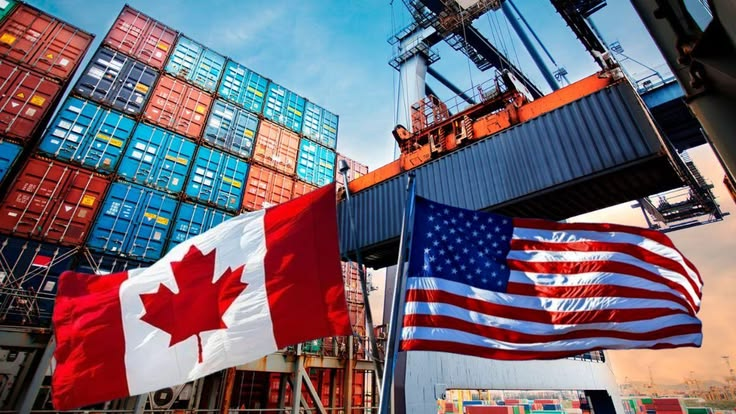
OTTAWA, Canada, October 6, 2026: The trade relationship between Canada and the United States remains tense and unsettled. The US has refused to renew the continental trade agreement for another 16 years, new American import bans took effect last week, and Canada has put counter-tariffs on billions of dollars of US goods. Talks have not stopped, but Washington says tariffs are not going away.
Where CUSMA stands
The Canada-US-Mexico Agreement, known as CUSMA in Canada and USMCA in the US, replaced NAFTA during Donald Trump’s first term. It came up for a joint review on July 1, 2026. The agreement allows each country to extend it for another 16 years, or to launch a series of annual reviews.
The United States formally declined to extend it on July 1. US Trade Representative Jamieson Greer said Washington would keep negotiating with Canada and Mexico over what the administration considers shortcomings in the deal. Importantly, this did not end the agreement. CUSMA remains in force, and under its review provisions it stays in place through 2036 unless a country withdraws.
Before the deadline, Trump had said he was “not looking to renew” it, adding that “we don’t need anything that Canada has.” The US trade agenda points to a goods deficit of roughly $46 billion with Canada and $197 billion with Mexico in 2025, arguing that imbalances have grown since the agreement took effect.
The refusal removed an important source of long-term certainty for businesses. The next formal review is in 2027.
What Washington is saying now
On September 30, G20 trade ministers met in Milwaukee. Greer said the administration is willing to negotiate with Canada and is in frequent contact with Canada-US Trade Minister Dominic LeBlanc. Canada’s International Trade Minister Maninder Sidhu also had an informal conversation with Greer, partly about the auto industry.
At the same time, Greer indicated that Washington is not planning to simply remove tariffs as part of a new arrangement. USTR describes tariffs as a lasting part of an economic strategy to reduce trade deficits and build domestic manufacturing. Days earlier, Greer said Trump was comfortable with the standoff and saw no immediate need for a deal.
Greer has told US lawmakers that he hopes to reach interim arrangements with Canada and Mexico before the end of 2026, leaving harder questions on North American content, autos and economic security for 2027.
New import bans
The dispute has moved beyond tariffs. On September 29, US import bans took effect on specified Canadian products, including some alcoholic beverages, dairy products and motorcycles. Some of those goods had previously faced additional duties of 50%.
The White House says the restrictions were imposed under Section 338 of the Tariff Act of 1930, in response to what it calls discriminatory Canadian trade measures. Canada disputes that description. The White House has also said the Section 338 duties apply even to goods that otherwise qualify under CUSMA.
Canada’s response
Ottawa has retaliated. Starting September 8, Canada imposed tariffs of 15%, 25% and 50% on about C$27.6 billion of US imports, matching the rates the US applies to affected Canadian goods. They target areas such as steel, dairy, appliances, agricultural equipment, pulp and paper, and electronics.
Canada has also tried to cushion the damage. In August the federal government announced C$7.5 billion in new and expanded support, on top of nearly C$25 billion already committed since US tariffs began hitting Canadian industries. The aim is to help companies retool, find new customers and manage disruption.
Prime Minister Mark Carney has said Canada will resume trade talks “when the Americans are ready” and has pushed back against US claims about why earlier talks failed. Last month’s reporting also noted that Trump has criticized the Carney government, and Commerce Secretary Howard Lutnick suggested the tone would change after the US midterms.
Why autos matter most
The auto industry shows the stakes. According to the federal government, more than 90% of vehicles assembled in Canada and roughly 60% of Canadian-made auto parts are exported to the United States. Canada produced more than 1.2 million passenger vehicles in 2025, and the sector supports about 125,000 direct jobs, concentrated in southern Ontario.
In August, Trump said tariffs on Canadian cars, trucks and auto parts could rise to 50% beginning January 1, 2027. It is not clear whether that will happen as announced, but it gives the auto file extra weight in any negotiation. Canada’s goal is to reduce US sector tariffs while preserving preferential access.
Steel under pressure
Steel is another sore point. At the Milwaukee meeting, Greer chaired the Global Forum on Steel Excess Capacity, where participants adopted the “Milwaukee Framework.” The OECD projects that global excess steelmaking capacity will rise from about 601 million tonnes in 2024 to 745 million tonnes by 2028. For Canadian producers, cooperation with Washington on overcapacity does not automatically mean relief from US tariffs on Canadian steel.
The effects are showing up locally. Stelco announced layoffs affecting as many as 500 workers in Ontario, citing declining demand and the trade dispute among the reasons. Canada’s manufacturing PMI fell from 53.0 in August to 51.5 in September. That is still above 50, which indicates expansion, but it was the weakest reading in six months, along with weaker business confidence.
Is Canada finding other customers?
Diversification is moving forward. Statistics Canada reported that the US accounted for 71.7% of Canadian merchandise exports in 2025, down from 75.9% in 2024, while exports to non-US destinations rose 17.2%. In July, exports to countries other than the US rose 7.4% in a single month to a record C$25.6 billion, making up 33.7% of merchandise exports.
Even so, the US remains by far Canada’s largest customer, and many industries were built around integrated North American supply chains. Diversification reduces exposure over time but cannot quickly replace that market.
What a deal could look like
Reporting on both governments’ positions suggests any agreement could come in several parts instead of one sweeping return to the old relationship. US concerns include Canadian dairy rules, provincial treatment of American alcohol, autos and market access, plus tougher rules of origin and preventing goods from non-member countries from using North American supply chains.
Canada’s stated goals include keeping tariff-free treatment for most trade while significantly reducing duties on strategically important industries. A narrower deal that cuts the pain but leaves some tariffs in place appears more realistic than a full removal.
Why this matters for Canadians
- Jobs: manufacturing, steel, dairy and autos are most exposed.
- Prices: counter-tariffs can raise the cost of some US goods for Canadian consumers and businesses.
- Provincial economies: Ontario and Quebec manufacturing communities face the most direct risk.
- Investment: businesses delay decisions when long-term trade rules are uncertain.
- Politics: the dispute shapes federal policy and will remain a central issue.
What to watch next
The US midterms on November 3. Some analysts expect little movement before then, and a former Canadian trade official has said a tariff deal is unlikely before the midterms.
Interim deal talks. Greer’s hope for interim arrangements by the end of 2026 is the main signal to watch.
The January 1 auto tariff threat. Any formal action would raise the stakes sharply.
The 2027 CUSMA review. Whether the agreement is eventually extended or reshaped remains open.
Final thoughts
The Canada-US trade relationship has not collapsed, but it has changed. CUSMA still protects most trade, and talks continue, while US tariffs have become a lasting feature and both countries have introduced new penalties. For Canadian businesses and workers, the most realistic outcome in the near term is not a return to the old arrangement but a negotiated reduction in the most damaging measures. How soon that happens depends on politics in both countries.
Sources: CBC News, CTV News, The Canadian Press via Global News and Yahoo Finance, Hashtag Investing (G20 trade and import-ban reporting), Investment Executive.