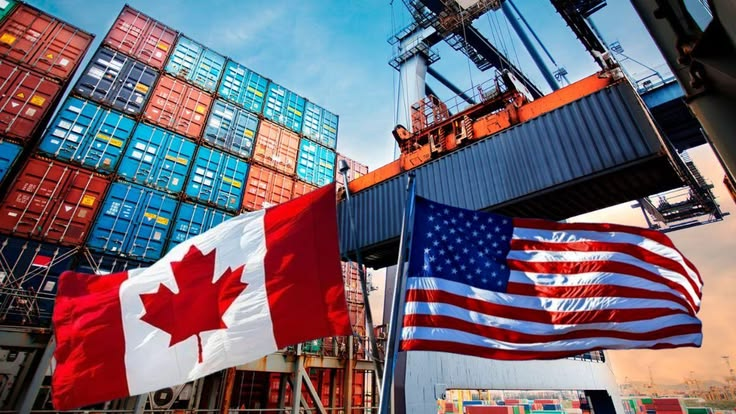











Ottawa, Canada — October 6, 2026: The Canadian government is moving forward with a major new investment aimed at strengthening the country’s food supply system and improving access to affordable food. The federal government announced that it will launch a $1 billion Food-Link Fund, part of its wider $3.2 billion National Food Security Strategy.
The new programme is designed to improve the way food moves from Canadian farms and producers to consumers. Government officials say the investment will support food terminals, regional food hubs, storage facilities, processing operations, transportation systems and other infrastructure needed to make Canada’s food distribution network more resilient.
The announcement comes as food affordability continues to be an important concern for Canadian households. Instead of focusing only on direct assistance to consumers, the government says it wants to address some of the infrastructure and competition issues that can contribute to higher costs throughout the food supply chain.
Canada launches the Food-Link Fund
Agriculture and Agri-Food Canada announced the upcoming Food-Link Fund on October 5, saying the programme will strengthen competition and improve the country’s food distribution network.
The fund is part of the federal government’s first National Food Security Strategy, which was announced by Prime Minister Mark Carney in June 2026.
The wider strategy is backed by $3.2 billion over 10 years, with the Food-Link Fund accounting for $1 billion of that investment.
According to the government, the programme is intended to make it easier and more efficient to move food from producers to markets.
That may sound like a technical infrastructure issue, but the government argues that it can have a direct effect on consumers.
Food does not move directly from a farm to a supermarket shelf. Between production and the final customer, products may need to be transported, stored, processed, packaged and distributed through several different businesses.
When parts of that system are expensive, inefficient or vulnerable to disruption, the additional costs can eventually reach consumers.
The federal government is therefore presenting the Food-Link Fund as a long-term investment in the infrastructure behind Canada’s food system rather than simply another short-term affordability programme.
What will the $1 billion fund support?
The Food-Link Fund will be divided into programmes aimed at different parts of Canada’s food distribution network.
One of the main components is the Food Terminal Fund.
The government says this programme will support the development and expansion of wholesale food terminals.
Wholesale terminals can provide farmers, food businesses and independent retailers with places where products can be bought and sold without relying entirely on the distribution systems controlled by Canada’s largest retailers.
That could potentially create more opportunities for smaller producers and independent grocery businesses.
The second major component is the Food Hub Program.
Food hubs are designed to connect producers with storage, processing, distribution and markets.
The government says these facilities can help address regional gaps in the food system, particularly in communities where producers may have difficulty reaching larger markets.
Eligible projects could include cold-storage facilities, transportation equipment, food-processing infrastructure, packaging operations and digital systems.
The government believes that improving these connections can help Canadian producers get more of their products to consumers while reducing some of the inefficiencies within the supply chain.
Why food distribution matters to Canadian consumers
The federal government’s announcement comes at a time when food prices remain an important issue for Canadian families.
The cost of groceries is influenced by many factors, including agricultural production, transportation, labour, energy, weather, international markets and retailer costs.
Government investment in food infrastructure cannot eliminate all of those pressures.
However, officials argue that improving the distribution system can make the market more competitive and resilient.
For example, a farmer may be producing food locally but still face difficulties getting it to consumers because there is not enough storage or processing capacity nearby.
A small grocery store may also face higher costs if it has limited access to wholesale suppliers.
A regional food hub could potentially connect those businesses and producers more efficiently.
The government’s strategy is therefore focused partly on improving the physical infrastructure that supports Canada’s food economy.
The federal government says stronger food supply chains can give producers more market opportunities while giving consumers more choices.
Applications will open later this month
Businesses and organizations interested in the new Food-Link Fund will not have to wait until next year to apply.
The government says the official application intake will open on October 14, 2026.
The application window will remain open for eight weeks and is scheduled to close on December 11, 2026.
Applicants will initially submit an Expression of Interest.
Projects that meet the objectives of the programme can then be invited to submit a full proposal.
That process means the government will be assessing which projects are most closely aligned with its food-security objectives before providing funding.
The programme could therefore attract applications from organizations involved in wholesale food markets, regional distribution, food processing, cold storage and other parts of the supply chain.
A bigger push for Canadian food production
The Food-Link Fund is also connected to the government’s broader effort to increase the role of Canadian-produced food in domestic markets.
The federal government says strengthening regional food systems can provide producers with better connections to consumers and create more opportunities for Canadian businesses.
This could become particularly important in areas where food must travel long distances before reaching consumers.
Regional food infrastructure could help shorten some supply chains and give producers more options.
However, it would be premature to assume that the new fund will immediately lower grocery prices.
The government itself is positioning the investment as a long-term measure.
Building or expanding food terminals, storage facilities and processing operations takes time. New infrastructure must also be properly managed and connected to producers, distributors and retailers.
The eventual impact will therefore depend on which projects receive funding and how effectively those projects operate.
The government says competition is a major part of the plan
Another important element of the announcement is competition.
Canada’s grocery sector has faced continuing scrutiny over the concentration of the market among large retailers.
The federal government says investment in wholesale terminals and regional food hubs can provide independent businesses with additional options for sourcing food.
That could potentially give smaller retailers greater access to Canadian producers.
For producers, additional buyers could also mean more opportunities to sell their products.
The government says this combination of stronger infrastructure and greater competition could contribute to a more resilient food system.
Still, competition is only one factor affecting grocery prices.
International commodity prices, fuel costs, weather conditions and production expenses can all influence what Canadians pay at the checkout.
Food security becomes a wider government priority
The Food-Link Fund represents a broader change in how the Canadian government is approaching food security.
Rather than viewing food security only as a question of whether enough food exists, the government’s strategy also considers whether food can move efficiently through the country and reach communities at affordable prices.
That includes infrastructure, transportation, storage, processing and access to markets.
The federal government says the National Food Security Strategy is intended to address these issues over a 10-year period.
The $1 billion Food-Link Fund is therefore only one part of a much larger programme.
Other elements of the strategy are expected to focus on strengthening supply chains, supporting producers and reducing unnecessary costs within the food system.
Regional communities could see major benefits
One of the most important potential benefits of the programme could be for regional and underserved communities.
Large urban centres often have access to extensive distribution networks and numerous retailers.
Smaller communities may have fewer options.
A lack of storage or processing infrastructure can also make it more difficult for local producers to serve nearby consumers.
The government says the Food Hub Program is specifically intended to address some of these regional gaps.
Projects could provide facilities where food can be stored, processed and distributed closer to where it is produced and consumed.
If successful, that could strengthen local food economies while providing producers with additional routes to market.
What happens next?
The immediate next step is the opening of applications on October 14.
The federal government will then assess Expressions of Interest before inviting qualifying applicants to submit full proposals.
That process will provide a clearer picture of where the first major investments will be made.
The success of the programme will ultimately be measured by more than the amount of money distributed.
The important questions will be whether food distribution becomes more efficient, whether producers gain better access to markets, whether independent businesses have more options and whether consumers eventually see meaningful benefits.
Canada’s food system is large and complex, so a single programme is unlikely to solve every affordability challenge.
Nevertheless, the Food-Link Fund represents a significant federal investment in the infrastructure behind Canada’s food supply.
What the latest Canada food security plan means
The Canadian government’s new $1 billion Food-Link Fund is designed to strengthen the infrastructure that connects producers, businesses and consumers.
The programme will support food terminals, regional food hubs, storage, processing, transportation and other projects intended to make Canada’s food distribution network more competitive and resilient.
The application period begins October 14 and continues until December 11.
For Canadian consumers, the biggest question will be whether these investments eventually translate into a more reliable and competitive food system.
For farmers and food businesses, the programme could provide new opportunities to reach markets and expand distribution.
The government’s wider National Food Security Strategy suggests that Ottawa sees food supply infrastructure as an important part of Canada’s economic and social priorities.
The results will take time to measure, but the next stage begins this month as organizations prepare their applications for federal funding.
Sources: Government of Canada, Agriculture and Agri-Food Canada, Prime Minister of Canada.