











QUEBEC CITY, Canada, October 6, 2026: Quebec voters have returned the separatist Parti Québécois (PQ) to power. The Canadian Press projected the win on Monday night, ending the long run of the Coalition Avenir Québec (CAQ) and bringing a party that wants Quebec independence back into government. The result adds a new challenge for Prime Minister Mark Carney’s federal government.
What happened on election night
The PQ, led by Paul St-Pierre Plamondon, was leading or elected in dozens of Quebec’s 127 districts as of 9 p.m. on Monday, according to The Globe and Mail. A party needs 64 seats for a majority in the National Assembly. At that point the numbers looked enough for a minority government, but some seats had not yet been called. Bloomberg also noted that it was not yet clear whether the PQ would win an outright majority.
The vote itself was described as a five-way race that showed a divided province and a splintered federalist vote. In other words, the parties that oppose independence split their support, which helped the PQ.
The outcome marks the first time in more than a decade that Quebec voters have chosen a separatist party to govern.
The end of the CAQ era
The result is a dramatic end to the Coalition Avenir Québec’s time in power. The CAQ won consecutive majorities under former premier François Legault. In 2022, it won 90 seats. The party was led into this election by Premier Christine Fréchette.
The PQ’s rise has been steady. It won only three seats in 2022, its worst result ever, and it had seven seats going into this campaign. It then won several by-elections, including Terrebonne, Jean-Talon and Arthabaska, which showed growing support.
A tough night for the Liberals
The Quebec Liberal Party, now led by Charles Milliard, was in second place on election night. The Globe and Mail says the Liberals, the most resolutely federalist party in Quebec, now face being locked out of power for a decade or more, which would be their longest stretch in opposition since the 1950s.
The referendum question
The biggest issue is independence. St-Pierre Plamondon has promised to hold another referendum on Quebec’s independence. He has said he would wait until President Donald Trump is no longer in office. Trump leaves office in 2029, and St-Pierre Plamondon says Quebec could then have a “serene” discussion about its future.
So a referendum is not expected immediately. Even so, the possibility will shape Quebec’s relations with Ottawa from the start of the new government. Two earlier referendums, in 1980 and 1995, both ended with Quebec voting to stay in Canada, the second by a very narrow margin.
Other PQ promises
The PQ campaigned on more than independence. Leader St-Pierre Plamondon pledged to abolish Santé Québec, the agency that manages the province’s health system, although he later suggested that part of it could remain as a division within the Ministry of Health.
The party also describes itself as combining Quebec sovereigntism, nationalism, social democracy and economic nationalism. Voters who supported it may have been motivated by health care, the cost of living or frustration with the previous government, not only by independence. Polls and post-election analysis will show how much each factor mattered.
What it means for Prime Minister Carney
Bloomberg describes the result as setting the stage for more strained relations with Carney’s government and an eventual referendum on independence. The federal government will have to work with a Quebec government that wants to leave the country.
That relationship will be tested by day-to-day issues, such as funding for health care, immigration, language and culture, and major economic projects. The Carney government is already pursuing an ambitious agenda that includes designating a West Coast oil pipeline called Pacific Link as a project of national interest. How Quebec responds to national projects may become a flashpoint.
Alberta votes in two weeks
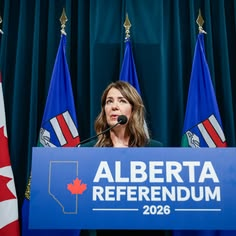
The Quebec result comes at a sensitive moment. According to the Canadian Press, Albertans vote in two weeks on whether to hold a referendum on separation from Canada.
It is important to be precise here. That vote is about whether to hold a referendum, not about leaving Canada directly. Still, having two provinces discuss separation at the same time puts national unity at the centre of the political conversation.
Why this matters for Canadians
Even for people who do not live in Quebec, the election could have effects.
- National unity: a government in Quebec that supports independence changes the tone of every federal-provincial discussion.
- Business and investment: uncertainty about a future referendum can affect investors, so the economic effects will be watched.
- Federal politics: the federal parties will have to decide how to respond, and Quebec seats are important in federal elections.
- Language and culture: Quebec’s identity policies are likely to become more prominent.
What to watch next
The final seat count. Whether the PQ has a majority or a minority matters a great deal. A minority government would need support from other parties and would be less able to pursue a referendum quickly.
The first speech and cabinet. The new premier’s early statements will show how fast the government wants to move on independence and how cooperative it will be with Ottawa.
Carney’s response. The federal government’s tone, whether conciliatory or firm, will set the direction of the relationship.
The Alberta vote. The result there will add to the national picture.
Public opinion on independence. A party can win an election without majority support for its main goal. Polls on the referendum question will be closely watched.
Final thoughts
The Parti Québécois victory is one of the most important political events in Canada this year. It ends years of CAQ government, leaves the federalist side divided and puts the question of Quebec’s future back on the national agenda.
A referendum is not imminent, and the PQ has said it will wait until after Trump leaves office. But the result means the issue will shape Canadian politics for years. For Canadians, the key questions now are how strong the PQ’s mandate is, how Ottawa responds, and whether national unity becomes the defining issue of the coming period.
Sources: The Canadian Press, The Globe and Mail, Bloomberg, CBC News, Wikipedia (background on parties and past results).