









Alberta Referendum
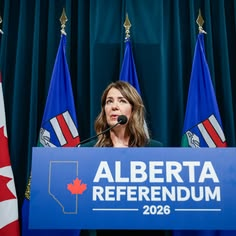
EDMONTON, Canada, October 6, 2026: In less than two weeks, Albertans will vote in a provincial referendum that includes a question on whether the province should begin the legal process toward a possible separation vote. The question has drawn national attention, especially after Quebec elected a separatist government this week. But the Alberta question is often misunderstood, so here are the facts.
What is on the ballot?
Albertans will be asked to vote on 10 separate questions on October 19. Premier Danielle Smith announced nine of them on February 19, and she added a tenth on May 21 about Alberta’s place in Canada. The questions cover immigration policy, public service eligibility, election security, equalization payments and broader constitutional powers, as well as the independence process.
Elections Alberta has said the questions will be colour-coded and that voters can skip some or all of them. It has estimated that up to 38 million printed ballots will be needed. Under provincial law, the ballots must be hand-counted within 48 hours, and the independence question will be counted first.
The exact wording of the separation question
The official question reads: “Should Alberta remain a province of Canada, or should the Government of Alberta commence the legal process required under the Canadian Constitution to hold a binding provincial referendum on whether or not Alberta should separate from Canada?”
This wording matters. A vote for the second option would not make Alberta leave Canada. It would not even trigger a binding separation vote. CBC reported that the question would not trigger a separation if Albertans voted yes, and that Smith described it as a way to understand the direction citizens want to take.
The government has also said the vote is a policy question, so under the law the result is not binding on the Alberta government.
Why is the question being asked?
Smith has pointed to two petitions. One, called “Forever Canada,” asked for a referendum on Alberta remaining in Canada. The other, “Stay Free Alberta,” asked for a referendum on leaving. Smith said that about 700,000 Albertans had signed petitions asking for a vote on the issue. Stay Free Alberta says some 300,000 people signed its petition, and Smith disputed the idea that the numbers came from one side.
Smith said the government’s question should not run afoul of a recent court ruling that invalidated a citizen-led petition for an independence referendum question. She has said she wants the vote to settle the debate democratically.
Where does Premier Smith stand?
Smith has said clearly that she supports Alberta remaining in Canada and that she will vote that way. On September 28, she appealed to Albertans to vote to stay. She has also said she will respect the result if Albertans choose the other option.
An organization called Vote to Stay was launched shortly after her May announcement.
What do the polls say?
The most detailed poll I found is from the Angus Reid Institute, published on May 25, so it is several months old. It found:
60% of Albertans would vote for Alberta to stay in Canada.
Half of respondents said the question is confusing.
56% said Smith has handled the separation issue poorly, including nearly a third of her own United Conservative Party voters.
69% believed that if Albertans vote to stay, separatists will never accept the result.
Because opinion can shift over five months, this poll should be treated as a snapshot, not a forecast. Please check for newer polling before relying on these numbers.
Why Quebec’s result matters here
Quebec voted on Monday to bring the separatist Parti Québécois to power. The Canadian Press noted that this comes two weeks before the Alberta vote. The two situations are very different. Quebec’s new government has promised its own referendum on independence, though its leader has said he would wait until Donald Trump leaves office. Alberta’s question is about whether to start a legal process, and the premier opposes separation.
Still, the timing has put national unity at the centre of Canadian politics. Prime Minister Mark Carney’s government now has to respond to both provinces at once.
The wider context in Alberta
Alberta has also been in the news for energy. On October 1, Carney travelled to Fort McMurray with Smith to announce that the Pacific Link West Coast oil pipeline would be the first project of national interest under the Building Canada Act. Supporters see it as a way to ease Western frustration with Ottawa. Critics, including some First Nations representatives and environmental voices, have raised concerns about consultation and emissions.
Frustration with federal policy is a major reason the separation debate has grown in Alberta, and the pipeline decision could affect how some voters see the question.
What happens after the vote?
There are three broad possibilities.
A clear vote to stay. This would likely ease pressure on the provincial government, although the poll found a large share of Albertans doubt that separatists would accept it.
A vote in favour of starting the legal process. The government would then have to decide how to proceed. Smith has said she will respect the result. A binding referendum on separation would still require a further, complex legal process under the Constitution, and it would involve the federal government and other provinces.
A close or confusing result. Because the question is complicated, a narrow margin could lead to disputes about what voters meant.
Why this matters for all Canadians
Even though only Albertans vote, the effects reach the whole country.
The economy: Alberta is central to Canada’s energy sector, and uncertainty can affect investment.
National unity: the result will shape the tone of federal-provincial relations.
Politics: parties will pay attention to what the vote shows about Western alienation and national identity.
The Constitution: any real separation process would raise major legal questions.
Final thoughts
The Alberta referendum is not a vote to leave Canada. It is a vote on whether to begin a process that could eventually lead to a further vote. Even so, the symbolism is strong, especially in the same week that Quebec chose a separatist government. The result on October 19 will show how much appetite there is in Alberta for that path, and how Canada’s leaders respond will matter for years.
Sources: CBC News, Angus Reid Institute, The Canadian Press, Wikipedia (referendum background), LifeSiteNews, CTV News (pipeline announcement).