









Introduction Adam Walsh Kidnapping and Murder
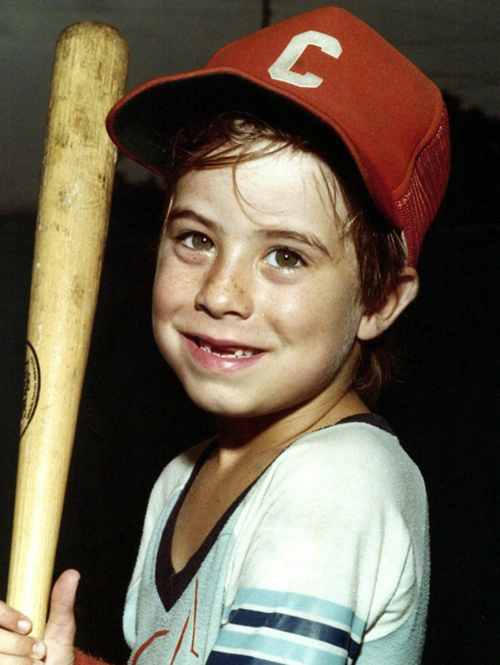
Adam John Walsh (November 14, 1974 – July 1981) was an American child whose disappearance and murder shocked the United States and became one of the most widely discussed child-abduction cases in the country.
On July 27, 1981, six-year-old Adam disappeared from a Sears department store at the Hollywood Mall in Hollywood, Florida. Nearly two weeks later, his severed head was discovered in a drainage canal near a highway in rural Indian River County. The remainder of his body was never recovered.
The case attracted enormous public attention and later inspired the 1983 television film Adam, which was watched by approximately 38 million people during its original broadcast.
Adam’s father, John Walsh, became a prominent advocate for missing and exploited children following the tragedy. He later hosted America’s Most Wanted and other crime programmes, helping bring attention to unsolved cases and the search for missing people.
Although convicted serial killer Ottis Toole confessed to Adam’s murder, he was never convicted of the crime. After years of investigation and review, police announced in December 2008 that they considered the case closed and believed Toole was responsible.
The Day Adam Disappeared
On the afternoon of July 27, 1981, Adam accompanied his mother, Revé Drew, on a shopping trip to the Sears store inside the Hollywood Mall in Hollywood, Florida.
The pair entered through the store’s northern entrance. Revé wanted to ask about a lamp that had been advertised for sale, so she briefly left Adam near a display kiosk featuring Atari 2600 video games.
Several other boys were gathered around the kiosk, taking turns playing the games. Revé expected Adam to remain there while she completed her shopping.
At approximately 12:15 p.m., she finished her business in the lamp department and returned to collect her son. However, Adam and the other boys were no longer there.
A store manager explained that an argument had apparently broken out among the boys over whose turn it was to play. A security guard intervened and instructed them to leave the store after learning that their parents were not present.
Adam’s parents later believed that their son might have been too shy to explain his situation to the security guard. They suspected he had been sent outside through a different exit from the one he had used to enter the store.
If that happened, Adam may have found himself alone in an unfamiliar location after the other boys went their separate ways.
Meanwhile, Revé searched the toy department and asked for Adam to be paged over the store’s public-address system. She also encountered her mother-in-law, Jean, who joined the search.
After more than 90 minutes of searching without success, Revé contacted the Hollywood Police Department at approximately 1:55 p.m.
What began as a frantic search for a missing child soon developed into a major criminal investigation.
The Discovery of Adam’s Remains
On August 10, 1981, approximately two weeks after Adam disappeared, a severed head was discovered in a drainage canal near the Florida Turnpike, close to Vero Beach.
Detective Ralph E. Latimer Jr. and a deputy from the Indian River County Sheriff’s Office found the remains. Authorities subsequently organised searches of the canal, with divers from Indian River and St. Lucie counties assisting in the effort.
The following morning, Adam’s parents appeared on national television. Despite the disturbing discovery, they publicly expressed hope that their son might still be alive.
A reward of $100,000 was offered for his safe return. However, investigators soon confirmed that the remains belonged to Adam.
The medical examiner determined that Adam had died from asphyxiation. The condition of the remains suggested that his death had occurred several days before the discovery.
Despite searches and investigative efforts, the rest of his body was never located.
The recovered head remained in the medical examiner’s custody until the case was officially closed in 2008.
The discovery ended the family’s hope of finding Adam alive and shifted the investigation entirely toward identifying the person responsible for his death.
The Investigation and Ottis Toole’s Confession
Investigators eventually focused on Ottis Toole, a drifter and convicted criminal who later became known for his association with serial killer Henry Lee Lucas.
According to Toole’s account, he encountered Adam outside the Sears store after the child had been instructed to leave the premises.
Toole claimed that he persuaded Adam to enter his white 1971 Cadillac Sedan de Ville by offering him toys and candy. The vehicle reportedly had damage to its right bumper.
He said that he initially intended to drive Adam toward Jacksonville, where he lived. During the journey, however, the child became frightened and began to panic.
According to Toole, he struck Adam in an attempt to silence him. When Adam continued struggling, Toole said he rendered the child unconscious.
Toole claimed that he then drove along the Florida Turnpike to a deserted service road near the boundary between St. Lucie and Indian River counties.
There, he said, he discovered that Adam was still breathing and strangled him with a seat belt. He then decapitated the child with a machete.
Toole further claimed that he transported the body back to Jacksonville and burned it inside an old refrigerator.
He also stated that he had wanted to adopt Adam as his son, although this explanation was not considered a credible justification for his actions.
Despite the details in his confession, investigators faced serious problems with the physical evidence. Blood discovered in Toole’s vehicle could not be conclusively identified, and important pieces of evidence—including the bloodstained carpet, the alleged murder weapon, and eventually the car itself—were lost.
These failures complicated efforts to establish the case beyond a reasonable doubt.
Toole repeatedly confessed to involvement in Adam’s murder and later withdrew his statements. He was never formally convicted of the crime.
Questions Surrounding Toole’s Confession
Although Toole’s account contained details that appeared consistent with aspects of the investigation, his credibility was a significant concern.
Both Toole and Henry Lee Lucas had a history of confessing to numerous murders, including crimes in which their involvement was later questioned or disproved.
Investigators and critics therefore had reason to examine their statements carefully rather than accept every confession as reliable.
The 2019 Netflix miniseries The Confession Killer later highlighted allegations that investigators had supplied Toole with information during questioning and that he had confessed to crimes he had not committed.
In September 1996, Toole died in prison at the age of 49 while serving a life sentence for other offences. His death meant that he could no longer be questioned or prosecuted in connection with Adam’s murder.
Afterward, Toole’s niece reportedly told John Walsh that her uncle had confessed to killing Adam shortly before his death.
However, the conflicting statements and missing evidence continued to raise questions about the reliability of the original investigation.
The 1997 Review of the Case
In 1997, Hollywood Police Chief Rick Stone conducted an extensive review of Adam’s murder investigation following the publication of John Walsh’s book Tears of Rage.
Stone had extensive experience in law enforcement, having previously served in police departments in Dallas, Texas, and Wichita, Kansas.
Although the crime had occurred 16 years earlier, Stone examined the available evidence and reviewed recordings of interrogations involving Toole.
After completing his review, Stone concluded that the evidence supported the belief that Toole had murdered Adam. He described the evidence as strong enough to establish guilt beyond a reasonable doubt.
Stone also acknowledged the difficulties created by the repeated confessions and recantations associated with Toole and Lucas.
The review reinforced the department’s belief that Toole was responsible, although it did not produce a criminal conviction.
Was Jeffrey Dahmer Connected to Adam’s Murder?
In 2007, renewed attention was directed toward another possible suspect: Jeffrey Dahmer, the convicted serial killer who murdered numerous men and boys before his arrest in 1991.
Dahmer’s father had contacted the America’s Most Wanted hotline after his son’s arrest, expressing concern that Dahmer might have been a paedophile.
Dahmer had been living in Miami Beach around the time Adam disappeared. Two eyewitnesses reportedly placed a man they later recognised as Dahmer at the Hollywood Mall on the day of the abduction.
One witness described seeing a suspicious man enter the toy department. Another recalled seeing a young, blond man with a prominent chin force a struggling child into a blue van before driving away.
Both witnesses reportedly recognised Dahmer after his photographs appeared in newspapers following his arrest. Reports also indicated that the delivery business where he worked had access to a blue van.
These accounts attracted attention because Dahmer’s known crimes involved young men and boys, and some included the dismemberment of victims.
However, there were important limitations to the theory. Dahmer repeatedly denied involvement when questioned about Adam’s case in 1992.
He reportedly argued that he had already confessed to his known murders and had no reason to conceal another killing if he had committed it. Other reports suggested that he feared being attacked in prison if he admitted to murdering a child.
John Walsh later stated that he had seen no evidence establishing a connection between Dahmer and Adam’s disappearance.
Consequently, Dahmer’s possible involvement remained an unconfirmed theory rather than an established conclusion.
The Case Is Officially Closed
On December 16, 2008, Hollywood Police Chief Chad Wagner announced that the department was closing its investigation into Adam’s murder.
Adam’s parents attended the announcement, which followed an external review of the case.
Police stated that they were satisfied that Ottis Toole had committed the crime, despite the absence of a conviction.
The decision brought an official conclusion to the investigation, although questions about the missing physical evidence and Toole’s unreliable confession have continued to attract public interest.
For Adam’s family, the announcement represented the end of an investigation that had lasted more than 27 years.
However, the circumstances surrounding the crime also had a lasting effect on American society, particularly in the areas of child safety, missing-person investigations, and the treatment of families whose children disappear.
The Television Film That Reached Millions
In October 1983, the television film Adam premiered, bringing Adam Walsh’s story to a national audience.
The production attracted approximately 38 million viewers during its first broadcast. It was subsequently shown again in 1984 and 1985.
One of the film’s most significant features was the presentation of photographs and descriptions of missing children after each broadcast. A telephone hotline was established so viewers could provide information about possible sightings.
The campaign was credited with helping locate 13 of the 55 children featured in the broadcasts.
Among those reunited with family was American rapper Bizzy Bone, who had been abducted by his stepfather as a child. A babysitter recognised his photograph during the programme, helping lead to his reunion with his mother.
The film demonstrated how television could be used not only to raise awareness of a crime but also to encourage public participation in finding missing children.
Its success helped establish a model for using widespread media attention to support missing-person investigations.
Laws and Organisations Created in Adam’s Memory
Adam’s murder became a major influence on efforts to improve child protection in the United States.
The Missing Children’s Assistance Act
In 1984, the United States Congress passed the Missing Children’s Assistance Act. Advocacy by John and Revé Walsh, along with other families affected by child disappearances, helped bring attention to the need for stronger national resources.
The legislation supported the creation of the National Center for Missing & Exploited Children, an organisation dedicated to helping locate missing children, prevent exploitation, and assist families and law-enforcement agencies.
The organisation became an important national resource for missing-child cases.
Code Adam
The Code Adam programme was also established in memory of Adam.
Used in participating retail stores and other facilities, the programme provides procedures for responding when a child is reported missing inside a building.
Employees are alerted and instructed to follow established safety measures to help locate the child and prevent an unauthorised departure.
The programme’s name serves as a lasting reminder of Adam’s disappearance from a department store.
The Adam Walsh Child Protection and Safety Act
On July 27, 2006, the 25th anniversary of Adam’s abduction, President George W. Bush signed the Adam Walsh Child Protection and Safety Act into law.
The legislation introduced a national system for tracking registered sex offenders and established additional penalties for certain sexual and violent crimes involving children.
It also included provisions intended to strengthen legal action against child predators and people conspiring with them.
Adam’s parents attended the signing ceremony at the White House, marking a significant milestone in the advocacy work they had pursued since their son’s death.
Further Legislation
The Adam Walsh Reauthorization Act of 2016 continued support for programmes established under the earlier legislation.
Its provisions were incorporated into the Survivors’ Bill of Rights Act of 2016, which was signed by President Barack Obama on October 7, 2016.
These legislative efforts demonstrated how the tragedy surrounding one family had helped influence national discussions and policies concerning child safety.
The Impact on American Society
The widespread attention surrounding Adam’s case and the television film inspired many parents to become more cautious about allowing their children to travel or play independently.
Criminologist Richard Moran of Mount Holyoke College described the social effect as the creation of a generation of frightened children and anxious parents.
Before the case received national attention, children in many communities commonly played outdoors and organised activities with relatively little adult supervision. Over time, parental concerns about stranger abductions contributed to more closely supervised childhood activities.
However, the intense public fear surrounding stranger kidnappings did not always reflect the actual patterns of child abduction.
Early estimates from the National Center for Missing & Exploited Children suggested that as many as 20,000 children might be abducted by strangers each year. Later reporting questioned these figures and highlighted substantial differences between initial estimates and documented cases.
A 1986 investigative report drew attention to this discrepancy, noting that the FBI had investigated only 67 abductions by complete strangers in 1984.
By 1988, estimates of stranger abductions had been reduced significantly. Research published in 1990 also indicated that the overwhelming majority of child abductions involved family members rather than unrelated strangers.
Despite these findings, public concern about stranger danger continued to influence parenting practices, school policies, and children’s independence.
Over subsequent decades, improvements in communication technology, including mobile phones, gave children additional ways to seek assistance and helped families respond more quickly when a child went missing.
The legacy of Adam’s case therefore includes both important advances in child protection and a broader debate about how society understands and responds to risks involving children.
Conclusion
The kidnapping and murder of Adam Walsh remains one of the most influential child-abduction cases in modern American history.
What began as a family’s desperate search for their missing six-year-old son became a national tragedy that transformed John Walsh into a leading advocate for victims and missing children.
Although Ottis Toole confessed to the murder, the loss of key evidence and his repeated changes of story prevented a conviction. Authorities ultimately closed the case in 2008, stating that they believed Toole was responsible.
Adam’s legacy extends far beyond the investigation itself. The television film based on his disappearance helped reunite missing children with their families, while laws and programmes created in his memory strengthened national efforts to protect children.
More than four decades later, Adam Walsh is remembered not only as a young victim of a devastating crime but also as the inspiration for lasting changes in child safety, missing-person awareness, and victim advocacy across the United States.