








WASHINGTON, United States, October 6, 2026: President Donald Trump’s tariff strategy is back before the courts. On September 30, a three-judge panel of the US Court of International Trade heard arguments in Manhattan about a new round of tariffs imposed under Section 301 of the Trade Act of 1974. The case will help decide whether a different legal authority can support the same kind of broad tariffs that the Supreme Court rejected earlier this year.
How the dispute got here
The Section 301 case is the third major legal fight over Trump’s tariffs in 2026.
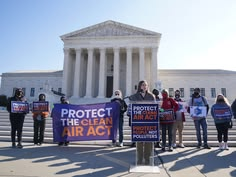
The Supreme Court ruling. On February 20, the Supreme Court ruled 6-3 that the International Emergency Economic Powers Act (IEEPA) does not give the president the power to impose tariffs. Chief Justice John Roberts wrote for the majority that Trump needed clear authorization from Congress and had not shown it. The ruling struck down the “reciprocal” tariffs and the “fentanyl” tariffs on Canada, Mexico and China. Trump later signed an order ending all IEEPA tariffs, effective February 24.
The Section 122 tariff. On the day of the Supreme Court decision, the administration imposed a temporary 10% global tariff under Section 122 of the Trade Act of 1974, and Trump said he wanted to raise it to 15%. On May 7, the Court of International Trade ruled 2-1 that the 10% tariff was unlawful, finding that a trade deficit is not the kind of balance-of-payments problem the law requires. But the court limited its relief to the plaintiffs, and an appeals court stay meant most importers kept paying while the appeal continued.
Section 301. The administration then turned to Section 301, which expressly allows the US Trade Representative (USTR) to take trade action, including duties, after an investigation.
What the Section 301 tariffs are
According to reporting on the case, the new tariffs took effect on July 24, 2026, after USTR investigated 60 major trading economies. Most were given additional duties of either 10% or 12.5%, depending partly on whether they already had rules to keep goods made with forced labour out of their markets. Canada was placed in the 10% group.
The administration says the measures are meant to pressure trading partners to stop products made with forced labour from entering their markets.
What happened at the hearing
The judges interrupted lawyers on both sides and repeatedly asked how much detail Section 301 requires before tariffs can be imposed. A central question was whether the government properly connected the conduct of individual countries to a specific burden on American commerce, instead of relying on general concerns about forced labour in supply chains.
The questioning went both ways. The judges also asked the challengers whether they were really asking for more paperwork instead of a fundamentally different investigation. Justice Department lawyer Eric Hamilton argued that USTR did not need absolute certainty before concluding that foreign practices harm US commercial interests, and said the law does not require proof with “metaphysical certainty.”
The court is expected to issue a written ruling, not decide the case from the bench.
Who is challenging the tariffs
The challengers are mainly American businesses that depend on imports. They include companies linked to educational products, flooring, specialty spices and independent watches. Named parties include Learning Resources, hand2mind, Burlap & Barrel and Collective Horology. A coalition of 25 Democratic-led states has also challenged the program.
Their argument is that Section 301 was designed to answer specific foreign practices with tailored responses, not to impose nearly uniform tariffs on dozens of very different economies. They say they do not dispute that forced labour is a serious problem. Their point is that the government must still meet the legal conditions Congress set.
The government’s defence
USTR says it ran a full investigation. It opened investigations into the 60 economies in March, held hearings in April, released findings on June 2, then opened another comment period and held three more days of hearings in July before announcing the final tariffs. The agency says it consulted more than 45 governments, received more than 2,100 public comments overall and reviewed more than 1,600 written comments on the proposed tariff response, as well as hearing from more than 100 witnesses.
Its core argument is that weak enforcement abroad lets forced-labour products compete unfairly with goods made without it, hurting compliant American producers.
What this means for businesses and shoppers
Tariffs are paid by US importers when goods enter the country. Businesses then decide whether to absorb the cost, negotiate with suppliers or raise prices. That is why small importers have been so active in court.
Several practical points follow:
- Section 301 tariffs remain in force while the court considers the case.
- Refunds are not automatic. After the Supreme Court ruling, refunds for IEEPA tariffs have moved through a customs process, but that process does not cover Section 122 duties, and relief in that case was limited to the plaintiffs.
- Other tariffs remain. The Supreme Court ruling did not affect industry-specific Section 232 tariffs. The Tax Foundation estimated that they would raise $635 billion over a decade and cost the average household about $400 in 2026.
The Canada angle
For Canada, the 10% rate is softened by an exemption. Canada’s government says goods that qualify for preferential treatment under CUSMA (the Canada-US-Mexico Agreement) are exempt from the Section 301 tariff, and says more than 99.9% of bilateral trade is potentially covered by that framework. Separate Section 232 tariffs on steel, aluminum and autos still apply.
What could happen next
The reporting describes two main possibilities. The court could set aside the tariffs broadly, or it could issue a narrower ruling that sends USTR back to do more work or explain its findings in more detail. The second outcome would leave room for revised tariffs.
Either way, the case is unlikely to end at the trade court. A decision can be appealed to the Federal Circuit and could reach the Supreme Court, which itself pointed to Section 301’s procedural requirements when it rejected the broader reading of IEEPA.
Why it matters beyond the courtroom
The case will help define how far a president can go in using Section 301 to impose broad tariffs, and how specifically the government must justify treating dozens of countries at once. It also arrives four weeks before the midterm elections, when prices and trade are already political issues.
Final thoughts
The tariff fight has moved from the Supreme Court to the Court of International Trade, and from emergency powers to a statute that gives the government more explicit authority. That makes the outcome harder to predict. Judges seemed interested in how much evidence the government must show, not only in whether it can act. The written ruling, and any appeal, will show whether this tool survives and whether importers and consumers get relief or face continued uncertainty.
Sources: Hashtag Investing (court hearing report), NPR, SCOTUSblog, Tax Foundation, Skadden, BDO, CNN headline listing.