










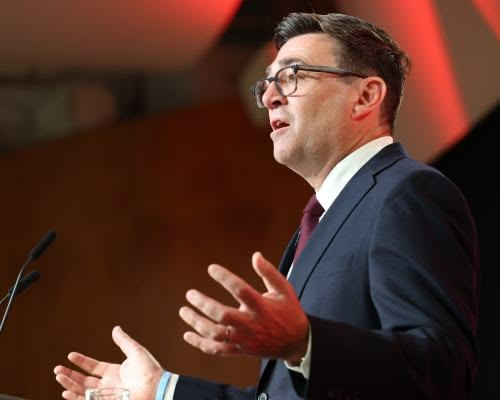
LONDON, United Kingdom, October 6, 2026: Prime Minister Andy Burnham has set out his plan for Britain’s future. In his first Labour Party conference speech as national leader, he promised a “new path” built around bigger public services, stronger care provision and a different approach to the economy. With a major pensions debate also under way, the next few months could define his time in Downing Street.
How Andy Burnham became Prime Minister
Burnham’s rise was fast. Keir Starmer announced in June that he would step down as Labour leader and prime minister after weeks of pressure that followed heavy Labour losses in local elections.
Burnham, who had been serving as mayor of Greater Manchester, won the Labour leadership. He was confirmed at a special party conference on July 17 and took office on July 20 after meeting King Charles III. He became the 59th prime minister and the seventh to hold the job in the past decade.
In his first speech outside 10 Downing Street, he said Britain must show it can regain stability, and he promised a “less toxic” kind of politics.
What he said at the Labour conference
On September 29 in Liverpool, Burnham told party delegates that Britain had been on the wrong path for a long time. He said he was ready to do things his predecessors would not, and he described a sense that the powerful were pulling against ordinary people, not with them.
His speech covered healthcare, pensions, electoral reform, affordable housing and publicly owned utilities. Three themes stood out.
A National Care Service. Burnham promised a National Care Service that would be free at the point of use. Social care for older and disabled people has long been a difficult area for British governments, and a free national service would be a large and expensive commitment.
Help for pensioners. He said low-income pensioners would not pay income tax during the current Parliament.
A bigger role for the state. In his first speech as prime minister, he had already spoken about building a new economy in which life’s essentials are put back under stronger public control. The conference speech repeated that message through the talk of public ownership of utilities.
The State Pension age debate
Pensions are also in the headlines. A parliamentary petition calling for the State Pension age to be lowered to 65 for everyone in the UK has passed 10,000 signatures, which means the government must issue a formal response. The petition was started on September 16 and stays open until March 16, 2027.
The State Pension age is currently rising from 66 to 67 in phases. The petition comes as Burnham confirms long-term changes to the pension system, including the triple lock, which raises the State Pension each year by the highest of inflation, average earnings growth or 2.5 per cent.
A government response to the petition is expected, and reports suggest Burnham may address the issue directly. Any change to the pension age would carry large costs, so the details will matter.
Other policies announced so far
Since taking office, Burnham has announced a series of measures. They include moving some government administration out of London under a plan called Number 10 North, cutting bus fares in England, reducing business rates for pubs, increasing support for apprenticeships and continuing support for Ukraine.
Many of these ideas reflect his years as a regional mayor. His approach is often described as “Manchesterism”, with a focus on devolution and rebuilding industry outside London.
The big question: how will it be paid for?
The speeches have been ambitious, and the economic reality is difficult. Reports on the conference described it as a test of Burnham’s popularity against economic reality. Expanding public services, protecting pensions and taking utilities into public control all cost money, and Britain’s public finances are already under pressure.
Critics are likely to ask where the money will come from. Options include higher taxes, more borrowing or cuts elsewhere, and each has political risks. Markets and credit-rating agencies also watch closely whenever a government announces large new spending.
Supporters will answer that years of weak growth and strained services call for bold action. They argue that investment in care, housing and infrastructure can pay for itself over time through a stronger economy.
International challenges
Burnham also has to manage Britain’s place in the world. Analysts have described him as the most pro-European prime minister since Tony Blair, although he is expected to talk about Europe less than Starmer did. They also describe a cooler attitude towards Washington than his predecessor showed.
On the same day he took office, President Donald Trump spoke with him by phone. How the UK balances its relationships with the United States and the European Union will be a major test, and he must do it while facing pressure from Reform UK at home.
Why this matters for ordinary people
For households, the practical effects could be wide.
Older people and carers: a National Care Service could change how care is funded and delivered.
Pensioners: decisions on the triple lock, the pension age and income tax could affect retirement income directly.
Commuters: lower bus fares would help people who rely on public transport.
Pub owners and local businesses: reduced business rates could ease costs for high street businesses.
Young people: more support for apprenticeships could open routes into skilled work.
What to watch next
Costings and timing. The government has not yet given a full account of what the National Care Service would cost or when it would arrive. Watch for the next Budget and any detailed policy papers.
The pension petition response. The official reply will show how willing the government is to change the State Pension age.
Public support. Burnham was popular as a mayor. Whether that carries over to national government, and whether Labour can rebuild trust after a rough period, will show up in opinion polls.
Party unity. The leadership change followed turmoil inside Labour. Keeping the party united while delivering costly reforms will be a continuing test.
Final thoughts
Andy Burnham’s first conference speech as prime minister set out a clear message: Britain needs a new direction, with stronger public services and a bigger role for the state. The proposals on social care, pensions and public ownership would be among the most significant changes to British public policy in years.
The harder part comes next. Turning promises into costed, workable policies will decide whether this becomes a lasting change or a moment of political optimism. For households across the UK, the details on care, pensions and living costs will matter far more than the speeches.
Sources: Al Jazeera, ABC News, CNN, Council on Foreign Relations, AOL/UK press reports, Wikipedia (policy summary).