









Mary Day Disappearance
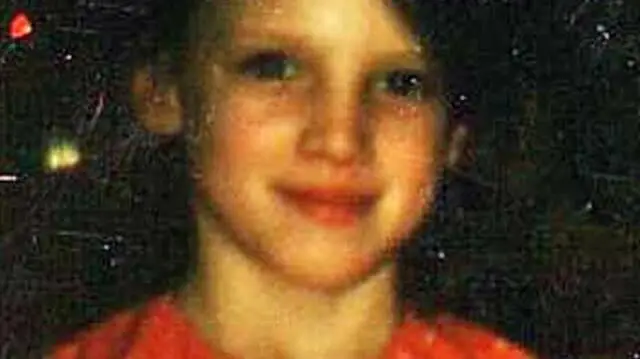
The Mary Day disappearance is one of the most unusual missing-person cases in California’s history. In 1981, 13-year-old Mary Louise Day vanished from her family’s home in Seaside, California. Her family reportedly said she had run away, but investigators later found no record of a missing-person report filed by her parents.
For more than two decades, there was little reliable information about what had happened to Mary. Her sister’s concerns eventually brought the case to the attention of police, who began investigating the possibility that the teenager had been killed.
Then, in November 2003, a woman identifying herself as Mary Day was found during a traffic stop in Phoenix, Arizona. DNA testing confirmed that she was Charlotte Houle’s biological daughter. But the discovery created another mystery: was this woman really the missing Mary?
Investigators continued examining the case for years. In 2017, a renewed review led police to conclude that the woman was Mary Louise Day. However, some questions and disagreements surrounding the case continued.
Who Was Mary Louise Day?
Mary Louise Day grew up in a family that experienced instability during her childhood. She and her sisters, Kathy and Sherrie, spent time in foster care after their mother, Charlotte, struggled to care for them. Sherrie was eventually adopted by her foster family, while Mary and Kathy returned to live with their mother.
Charlotte later married William Houle, a United States Army serviceman. His military assignments meant the family moved between different locations, eventually settling in the Seaside area of California near Fort Ord.
Mary’s childhood was reportedly difficult. According to information later discussed by investigators, she had been placed in protective custody in Hawaii in December 1980 following reports of physical abuse. She eventually returned to the Houle household.
These earlier family circumstances became important when detectives began investigating Mary’s disappearance years later.
The Disappearance in 1981
Mary disappeared from the family’s home in Seaside sometime in 1981, when she was 13 years old. The precise date is not consistently established in the available reporting, although the case has often been associated with July of that year.
One of the most troubling accounts came from Mary’s younger sister, Kathy Pires, who later described the family’s final known night with Mary.
According to Kathy, she and Mary had stayed home while the rest of the family went out to dinner. When the family returned, William Houle discovered that his dog was seriously ill. He accused Mary of poisoning the animal and became violent.
Kathy later told investigators that William struck Mary during the confrontation. She recalled seeing blood coming from her sister’s mouth.
The following morning, Mary was gone.
Kathy said that when she asked their mother where Mary had gone, Charlotte told her that Mary had run away. Kathy also recalled being told not to discuss her sister.
These accounts became central to the investigation, but they were retrospective family testimony. They should not be confused with a complete, independently verified record of everything that happened inside the home that night.
Why Was Mary Not Reported Missing?
The absence of an official missing-person report became one of the most significant questions in the case.
Mary’s sister Sherrie Calgaro never felt satisfied with the explanation that Mary had simply run away. As an adult, she contacted authorities and reported her sister missing. Sources differ on the exact year of her initial report, with accounts referring to the early 1990s.
Seaside Police began a more substantial investigation in 2002. Detective Joe Bertaina was assigned to examine Mary’s disappearance and reconstruct her life before she vanished.
Investigators struggled to find evidence that Mary had lived independently as an adult. They found no clear trail of employment, identification or school records that could explain where she had gone.
Police also learned that Mary had apparently not been enrolled in school in California during the period when the family lived in Seaside.
The lack of a missing-person report, combined with the absence of records and the family’s limited explanation, raised serious concerns for investigators.
Allegations Against William Houle
As detectives interviewed family members, attention increasingly focused on William Houle.
Kathy described the alleged beating on the night Mary disappeared and directed investigators to an area of the backyard where she said the children had been told not to play.
During a 2003 search of the former family property, investigators brought in cadaver dogs. According to former Seaside Police Chief Steve Cercone, several dogs alerted near the same area of the backyard.
Police dug at the location and discovered a small girl’s shoe. However, they did not recover human remains, and the shoe alone could not establish that Mary had been buried there.
William Houle was also questioned about the confrontation involving his dog. According to Detective Bertaina’s account, Houle acknowledged striking Mary and described an incident in which he tried to stop her from leaving the house. He denied deliberately killing her, but made disturbing comments about the possibility that he had lost control.
Investigators regarded his statements as suspicious. Nevertheless, no murder conviction resulted from the investigation, and the available evidence did not establish conclusively that Mary had been killed.
The Woman Found in Phoenix in 2003
The case took an extraordinary turn in November 2003.
During a routine traffic stop in Phoenix, Arizona, police stopped a pickup truck with stolen license plates. When officers checked the passengers’ identification, one woman presented an Arizona identification card bearing the name Mary Day.
The name and birth date matched those of the missing California teenager.
The discovery surprised investigators in Seaside. They had been examining the possibility that Mary was a homicide victim, yet a woman using her identity had suddenly appeared in another state.
The woman told authorities that she had left home as a teenager to escape an abusive household. She described years of living under different circumstances and explained that she had not maintained contact with her family.
Investigators initially questioned her account. Her accent, limited memories of certain childhood events and the recent issue date of her identification card raised concerns.
DNA testing, however, established that she was Charlotte Houle’s biological daughter. The result led authorities to treat the discovery as a major breakthrough, although questions about the woman’s identity and past continued.
Why Did Her Sisters Question Her Identity?
The DNA result did not immediately end the controversy.
After the woman moved in with her sister Sherrie, both Sherrie and Kathy reportedly noticed differences that made them question whether she was the same girl they remembered.
They raised concerns about her accent and her inability to recall certain childhood details. Kathy also remembered a private code word, “Mohawk,” that she and Mary had shared. The woman reportedly did not remember it.
Investigators also learned that the woman had used another name, Monica Devereaux, during part of her adult life. A message she sent to Detective Bertaina reportedly included a statement suggesting she had not been truthful about her identity.
These details strengthened suspicion among some family members and investigators. However, they did not independently prove that the woman was an impostor.
A retired homicide investigator, Mark Clark, later developed a theory that the woman could have been another biological daughter of Charlotte who had assumed Mary’s identity. He believed this might explain the DNA result and some of the inconsistencies.
That theory remained an allegation, not an established finding.
The 2008 Search at Fort Ord
The controversy continued in 2008, when another set of cadaver dogs alerted near a second property where the Houle family had lived after leaving Seaside.
The property was associated with the family’s time at Fort Ord. Investigators considered whether Mary’s remains might have been moved from one location to another.
Police searched the area, but no human remains were recovered.
The second search renewed questions about the original disappearance. It also reinforced the disagreement between investigators who suspected a homicide and those who believed the woman found in Arizona was Mary.
The 2017 Investigation That Changed the Case
Years after the Phoenix discovery, Seaside Police revisited the evidence.
Acting Police Chief Judy Veloz examined the woman’s background and investigated the years she said she had spent away from her family. Her work uncovered information about people who had known Mary after she left home.
One important lead involved Morie Kimmel, a woman who recalled taking in a young teenager who was living independently and appeared vulnerable. Kimmel remembered the girl as being around 15 years old and described her as someone who needed care and support.
Investigators also located a photograph showing the young woman after the period when detectives had suspected Mary was murdered. The image was important because it provided evidence that she had been alive after the alleged killing.
CBS News reported that a facial-recognition company compared the photograph with images of Mary from childhood. The company’s analysis gave a 99% probability that the images showed the same person. This was a facial-image comparison, not a DNA result.
Investigators also obtained additional DNA results showing that the woman was biologically related not only to Charlotte Houle but also to Mary’s birth father.
Veloz concluded that the woman was Mary Louise Day. She also found explanations for some of the concerns that had previously raised suspicion, including Mary’s use of another name and her limited memories of childhood.
The Seaside Police investigation was closed in 2017.
What Happened to Mary Day After Her Disappearance?
According to the later investigation, Mary survived after leaving her family home and spent years moving between different places.
She reportedly used the name Monica during part of her life and struggled with instability. Investigators traced her to people who had encountered her as a teenager and young adult.
The woman found in Arizona later lived in several places, including Missouri. By 2017, she was seriously ill with late-stage cancer.
Sherrie visited her during the final period of her life. After learning about the evidence gathered by Veloz, Sherrie said she felt more certain that the woman was her missing sister.
Mary Day died nine days after Veloz interviewed her in 2017. According to CBS News, there was no funeral.
Was the Mary Day Disappearance Finally Solved?
The official investigation reached a conclusion in 2017: Seaside Police determined that the woman found in Arizona was Mary Louise Day, the teenager who disappeared in 1981.
The additional DNA findings, the photograph taken after the suspected murder period and the accounts of people who knew Mary after she left home supported that conclusion.
However, not everyone accepted the outcome. Retired investigator Mark Clark continued to question the woman’s identity and maintained his belief that Mary had been murdered. Former Police Chief Steve Cercone also continued to express concern about the cadaver-dog alerts at the former family properties.
It is important to distinguish those continuing doubts from the final police conclusion. The impostor theory was never established as fact, and no court finding proved that William or Charlotte Houle murdered Mary.
The Mary Day disappearance remains a complicated case involving alleged childhood abuse, a missing-person investigation delayed for years, disputed family memories and an unexpected discovery in another state.
Its most significant lesson is how difficult it can be to reconstruct a child’s life when the disappearance goes unreported and the people who might have provided answers give conflicting accounts.
Mary Day Disappearance: Key Timeline
| Date | Event |
|---|---|
| February 19, 1968 | Mary Louise Day was born in Little Falls, New York. |
| December 1980 | Mary was reportedly placed in protective custody in Hawaii following abuse concerns. |
| 1981 | Mary, aged 13, disappeared from the family home in Seaside, California. |
| Early 1990s | Her sister Sherrie sought help from authorities and reported her missing. |
| 2002 | Seaside Police began a substantial investigation into the disappearance. |
| 2003 | Cadaver dogs alerted in the backyard of the former family home, where investigators found a small girl’s shoe but no remains. |
| November 2003 | A woman identifying herself as Mary Day was found during a traffic stop in Phoenix, Arizona. |
| 2008 | Cadaver dogs alerted near another former Houle family property at Fort Ord; no remains were recovered. |
| 2017 | Seaside Police concluded that the woman found in Arizona was Mary Louise Day. |
| 2017 | Mary died nine days after her final interview with investigators. |
Related Missing-Person Cases
The Mary Day disappearance is one of many cases in which a missing child left behind years of unanswered questions. Readers interested in similar investigations can explore other cases covered by NovaSkill, including the disappearance of Sherri Ann Jarvis, Bobby Dunbar and Adam Walsh.
Sources and Further Reading
- CBS News – What Ever Happened to Mary Day?
- CBS News – Detectives Thought Teen Mary Day Was Murdered. So Who Was the Woman Claiming to Be Her?
- CBS News – The Mysterious Disappearance of Mary Day: Case Photographs
This article distinguishes reported family accounts, investigative theories and the conclusion reached by Seaside Police in 2017. Allegations that Mary was murdered or that the woman found in Arizona was an impostor have not been established as fact.