








Disappearance of Duncan MacPherson
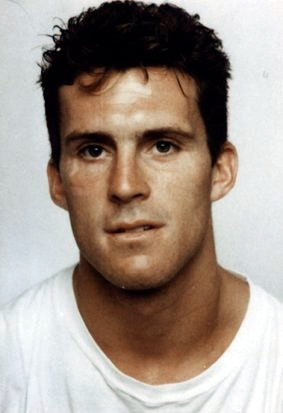
On August 9, 1989, 23-year-old Canadian hockey player Duncan MacPherson disappeared while visiting the Stubai Glacier in Austria. He was travelling through Europe before beginning a new coaching opportunity in Scotland. By the time his family realised he had not arrived at his destination, his trail had gone cold.
His abandoned red Opel Corsa was eventually discovered near the Austrian glacier, but searches failed to establish what had happened to him. For almost fourteen years, his parents continued looking for answers.
In July 2003, melting ice revealed human remains on the Stubai Glacier. They belonged to MacPherson. Although the discovery finally explained where he had disappeared, it raised further questions about the circumstances of his death.
Austrian authorities considered a fall into a glacier crevasse the most likely explanation. His family, however, questioned the investigation and believed that an accident involving a snow-grooming machine might have played a role.
Renewed forensic attention in 2025 brought the case back into the spotlight. Yet the evidence has not produced a universally accepted explanation of what happened to Duncan MacPherson.
Early Life and Hockey Career
Duncan Alvin MacPherson was born on February 3, 1966, in Saskatoon, Saskatchewan, Canada. He developed an interest in ice hockey at a young age and became a promising defenceman.
His talent earned him a place with the Saskatoon Blades of the Western Hockey League (WHL), where he built a reputation as a capable young player.
In the 1984 NHL Entry Draft, the New York Islanders selected MacPherson 20th overall in the first round. It was an important achievement for a young player hoping to establish himself in professional hockey.
He subsequently played minor-league hockey, including time with the Springfield Indians of the American Hockey League. His professional career also included the Indianapolis Ice of the International Hockey League.
Despite his early promise, injuries affected his progress. By 1989, his playing career with the Islanders had come to an end.
Rather than abandon hockey, MacPherson began looking for opportunities overseas. He accepted an offer to become a player-coach with the Dundee Tigers in Scotland.
The position gave him an opportunity to remain involved in the sport while beginning a different chapter of his life. Before travelling to Scotland, however, he planned to spend some time exploring Europe and visiting friends.
Duncan MacPherson’s Journey to Europe
During August 1989, MacPherson travelled through Germany and Austria. He was expected to arrive in Dundee, Scotland, on August 12 to begin his new position.
On August 6, he reportedly set out from Germany in a borrowed red Opel Corsa, intending to travel through Austria towards Italy.
On August 10, he reportedly contacted the owner of the Dundee hockey club from an unknown location. This was among the last reported communications associated with his journey.
At some point during his travels, MacPherson decided to visit the Stubai Glacier in the Austrian state of Tyrol.
The region was known for its high-altitude slopes and glacier skiing facilities. It was there that he took a snowboarding lesson, rented equipment and was last confirmed alive.
Nothing about the trip suggested that his visit to the Austrian Alps would become the beginning of a mystery lasting almost fourteen years.
The Last Known Sighting at Stubai Glacier
August 9, 1989, became the most important date in the investigation.
According to an Austrian parliamentary document submitted in 2009, MacPherson received private snowboarding instruction at the Stubai Glacier that morning. He rented a snowboard, ski clothing and boots for the activity.
The parliamentary record states that he was last seen alive at approximately 2:30 p.m.
The exact events following that sighting remain disputed.
Information later presented by his family and journalist John Leake suggested that MacPherson had spent part of the day at the Eisgrat mountain station, where he rented his equipment and received instruction.
He was reportedly expected to return the rented equipment before the end of the day. Questions about whether the snowboard and boots had actually been returned became important to the later investigation.
There was no confirmed communication from MacPherson establishing that he had safely left the glacier.
When he failed to arrive in Scotland, concern grew among his family and those expecting him.
The Discovery of His Abandoned Car
MacPherson’s disappearance initially left his family with very few clues.
The most important physical evidence was the red Opel Corsa he had borrowed before travelling through Europe.
On September 20, 1989, the vehicle was discovered in the parking area of the Stubai Glacier resort near Neustift, Austria.
A contemporary UPI report published on September 23 described how mountain rescue workers were preparing to search the surrounding glacier after the vehicle was found.
A backpack and a watch believed to belong to MacPherson were reportedly inside the car.
His parents and girlfriend had travelled to Austria in search of him. Around 40 mountain rescue workers were expected to assist in the search, although the difficult weather and high-altitude conditions made the operation challenging.
The abandoned vehicle established that MacPherson had visited the area, but it provided no direct explanation of his disappearance.
The discovery also came after considerable time had passed since his last confirmed sighting.
Despite the search efforts, he could not be found.
Questions About the Original Police Investigation
The handling of the original investigation became a major source of controversy.
In June 2009, Austrian parliamentarian Peter Pilz submitted a formal parliamentary inquiry concerning MacPherson’s death and the investigation surrounding his disappearance.
The Austrian Ministry of the Interior responded on August 28, 2009. Its written response provided details about the police records from 1989.
According to the official document, MacPherson was entered into the police missing-person search system on September 1, 1989, at 4:33 p.m.
However, a police communication dated September 6, 1989, stated that further searching was no longer considered useful because his last reported location had been given as Füssen, Germany.
The Ministry acknowledged that the reasons for this decision could no longer be reconstructed.
This detail became particularly significant because the family had continued searching for their son and later questioned whether the investigation had properly followed the available leads.
The parliamentary response also explained that authorities initially considered an accident involving a glacier crevasse the most likely explanation for his disappearance.
The official records do not establish deliberate wrongdoing, but they document decisions that became central to the family’s concerns.
Human Remains Discovered in the Melting Glacier
On July 18, 2003, almost fourteen years after MacPherson disappeared, a discovery at the Stubai Glacier changed the direction of the case.
Resort employees found human remains on a ski slope near the Eisjoch lift. The remains were recovered from the glacier, where they had been preserved beneath the ice for years.
Identification documents found with the remains helped establish that the deceased was Duncan MacPherson.
The discovery was reported internationally, including by the Associated Press and the Los Angeles Times.
MacPherson’s parents were informed and prepared to travel to Austria. They had spent years trying to locate their son, visiting the region and seeking information about his final movements.
For the family, the discovery brought an end to the uncertainty about his whereabouts.
However, it did not provide a definitive explanation of how he had died.
The location of the remains also became important. The discovery was made on a ski slope rather than simply in an isolated area far from the resort facilities.
That detail later featured prominently in discussions about the investigation and the possibility of an accident involving resort machinery.
Why Was No Full Autopsy Conducted?
One of the most disputed aspects of the Duncan MacPherson case concerns the medical examination of his remains.
According to the Austrian government’s parliamentary response, investigators considered an accidental fall into a glacier crevasse the most likely explanation. They did not identify evidence of third-party involvement and therefore did not consider a judicial autopsy necessary.
The remains were examined by a local medical officer, and a forensic autopsy was not ordered by the public prosecutor.
A CT examination was subsequently arranged, providing images of the remains and their injuries.
MacPherson’s parents later questioned whether the examination had been sufficient to establish how their son died.
They believed that the injuries visible in the medical images deserved closer examination, particularly because of the possibility of contact with heavy machinery.
The absence of a conventional autopsy meant that important questions about the injuries and the precise mechanism of death remained difficult to resolve.
The Snowcat Accident Theory
The alternative explanation for MacPherson’s death is closely associated with his parents and journalist John Leake, author of Cold a Long Time: An Alpine Mystery.
They questioned whether a snow-grooming machine, commonly called a snowcat, might have been involved in an accident on the glacier.
A snowcat is a tracked vehicle used to prepare ski slopes and move snow across mountain terrain. Some models use rotating equipment to break up and redistribute snow.
According to the alternative theory, MacPherson may have suffered an accident while snowboarding and been left injured on the slope.
Poor visibility and difficult weather conditions could have made it harder for a machine operator to see someone lying on the snow.
The theory proposes that a snow-grooming machine may subsequently have struck him, causing severe injuries.
His family also questioned whether the remains could have been moved or concealed in a glacier crevasse after such an incident.
These claims have never been established as proven facts.
The theory developed from the family’s interpretation of the injuries, the damaged snowboarding equipment and questions about the original investigation.
It should therefore be understood as an alternative explanation rather than an officially confirmed account.
The Injuries and the Disputed Forensic Evidence
The condition of MacPherson’s remains became another important issue.
His family and John Leake questioned the reported fractures and damage visible in the medical images. They believed that the pattern of injuries might be inconsistent with the original explanation of a simple fall into a crevasse.
However, glacier movement can place considerable pressure on objects and human remains trapped within ice for extended periods.
The Austrian authorities maintained that the injuries could be explained by an Alpine accident and the movement of the glacier.
This disagreement illustrates the central difficulty of the case: the remains were recovered after almost fourteen years, and the available evidence could not easily establish the exact sequence of events.
Without a complete forensic investigation at the time of recovery, later interpretations had to rely on the surviving medical images and historical records.
New Forensic Examination in 2025
The case received renewed attention in October 2025 when Austrian broadcaster ORF presented the documentary Tod am Gletscher – Die Akte Duncan MacPherson.
The programme revisited the original disappearance, the discovery of the remains and the disagreements surrounding the investigation.
One of its most important elements was a new examination of CT images taken in 2003.
An independent radiology team from Diagnosezentrum Wien-Hietzing reviewed the available images and offered further observations about the injuries.
The examination provided new perspectives on the possible sequence of events and renewed discussion about whether contact with a snow-grooming machine could have contributed to the injuries.
The findings did not establish that a snowcat had struck MacPherson. They also did not prove that anyone had deliberately concealed his death.
The glacier operator, Reinhard Klier, rejected allegations of a cover-up and defended the original position that the death resulted from an accident.
The documentary nevertheless demonstrated that important questions about the case had not disappeared.
More than three decades after MacPherson vanished, the evidence continues to be examined from different perspectives.
Duncan MacPherson Case Timeline
The following timeline summarises the major events documented in historical reporting and Austrian parliamentary records.
| Date | Event |
|---|---|
| February 3, 1966 | Duncan MacPherson was born in Saskatoon, Canada. |
| 1984 | Selected 20th overall by the New York Islanders in the NHL Entry Draft. |
| August 6, 1989 | Reportedly began travelling from Germany through Austria towards Italy. |
| August 9, 1989 | Took snowboarding instruction at Stubai Glacier and was last seen alive at approximately 2:30 p.m. |
| August 10, 1989 | Reportedly contacted the Dundee hockey club owner. |
| August 12, 1989 | Expected arrival date in Scotland; he failed to appear. |
| September 1, 1989 | Austrian police entered him into the missing-person search system. |
| September 6, 1989 | A police communication stated that further searching was no longer considered useful. |
| September 20, 1989 | His abandoned red Opel Corsa was discovered near Stubai Glacier. |
| July 18, 2003 | His remains were discovered near the Eisjoch lift. |
| July 2003 | His identity was confirmed and the family was informed. |
| June 29, 2009 | Parliamentary questions concerning his death were submitted in Austria. |
| August 28, 2009 | The Austrian Ministry of the Interior issued its written response. |
| October 22, 2025 | ORF broadcast its documentary revisiting the case and examining the available forensic evidence. |
What Happened to Duncan MacPherson?
There are two principal explanations surrounding MacPherson’s death.
The official Austrian position considered an accidental fall into a glacier crevasse the most likely explanation. Authorities did not identify evidence establishing third-party involvement.
His parents and journalist John Leake questioned that conclusion. They believed that the injuries and other evidence warranted further examination, particularly the possibility of an accident involving a snow-grooming machine.
The 2025 ORF documentary brought renewed forensic attention to the case, but it did not establish a definitive alternative cause of death.
There is no publicly established proof that a resort employee deliberately harmed MacPherson or that a cover-up took place.
The distinction between the official explanation and the family’s alternative theory remains essential when examining this case.
Why the Duncan MacPherson Case Still Matters
The disappearance of Duncan MacPherson remains a significant example of how difficult it can be to investigate an incident in a remote mountain environment.
His family spent nearly fourteen years searching for him. When his remains were finally recovered, they expected the discovery to provide answers. Instead, it opened another chapter of questions about the original investigation and the medical examination.
The case also demonstrates why accurate recordkeeping, careful forensic procedures and transparent communication with families matter in missing-person investigations.
Modern imaging technology has allowed specialists to reconsider evidence that was collected years earlier. Even so, new interpretations cannot always replace the information that might have been obtained through a more comprehensive examination at the time.
For MacPherson’s family, the search for a convincing explanation has continued long after the discovery of his remains.
The circumstances of his final hours at Stubai Glacier remain disputed, and the available evidence has yet to settle the competing explanations.
Related Missing-Person Cases
Readers interested in historical disappearances and unidentified victims may also explore these investigations:
- Sherri Ann Jarvis: The Walker County Jane Doe Case – The identification and investigation of a teenage murder victim whose case remained unresolved for decades.
- Disappearance of Bobby Dunbar – A historical missing-child case involving a disputed identity and later DNA evidence.
- Adam Walsh Case – The disappearance and murder investigation that became one of America’s most widely discussed missing-child cases.
Sources and Further Reading
The following sources provide historical reporting, official documentation and later investigative coverage:
- Austrian Parliament – Official Government Response (2009): Written response concerning the death of Duncan MacPherson
- Austrian Parliament – Original Parliamentary Inquiry (2009): Questions concerning the death of Duncan MacPherson
- ORF Austria – 2025 Documentary: Tod am Gletscher – Die Akte Duncan MacPherson
- UPI Archives – September 23, 1989: Austrian glacier combed for missing Canadian hockey player
- Los Angeles Times – July 22, 2003: Hockey Player’s Body Found Frozen in Alps
- Associated Press – July 21, 2003: Mystery of missing NHL prospect solved
- John Leake – Cold a Long Time: Disappearance and Discovery
Editorial note: This article distinguishes official records from family allegations and investigative theories. The snow-grooming machine explanation has not been established as fact.